Flamingo Las Vegas History: Billy Wilkerson & Bugsy Siegel
Read Article →
Sands Hotel & Casino Las Vegas History (1952–1996): Wayne McAllister's Design, the Copa Room & the Rat Pack
The Sands Hotel and Casino opened on December 15, 1952, at 3355 Las Vegas Boulevard South, developed for $5.5 million by Houston gambling operator Jake "Jakie" Freedman on the former site of Billy Wilkerson's LaRue Restaurant and designed by Strip pioneer architect Wayne McAllister. World-renowned for Jack Entratter's intimate Copa Room, the January 1960 Rat Pack Ocean's 11 summit, and Martin Stern Jr.'s cylindrical 17-story tower, the Sands closed on June 30, 1996, and was imploded by Sheldon Adelson on November 26, 1996, to build The Venetian.
As the seventh resort erected along Highway 91, the Sands fused desert-modern California architecture with East Coast supper-club polish. By granting marquee entertainers such as Frank Sinatra equity points in the casino alongside unprecedented artistic freedom onstage, Freedman and Entratter turned a 200-room motor hotel into the cultural epicenter of mid-century Las Vegas.

Opening-era documentation from December 1952 celebrating debut headliner Danny Thomas and Wayne McAllister's cantilevered Sands porte-cochere at 3355 Las Vegas Boulevard South.
In This Article • 5 Archival Photographs
Click any photo to view full size
Archival Landmark Dossier
Street Address
3355 Las Vegas Boulevard South, Paradise, NV
Opening Date
December 15, 1952 (200 rooms across 5 two-story wings; $5.5M cost)
Architects
Wayne McAllister (1952 original resort); Martin Stern Jr. (1967 circular tower)
Signature Venue
The Copa Room (managed by Jack Entratter; Rat Pack home stage)
Closed & Imploded
Closed June 30, 1996; imploded November 26, 1996 at 2:16 a.m.
Site Today
The Venetian Resort Las Vegas (opened May 3, 1999)
How Did Jakie Freedman and Wayne McAllister Build the Sands on the LaRue Restaurant Site in 1952?
Before neon letters spelled "The Sands" across Highway 91, the parcel at 3355 Las Vegas Boulevard South held the 1946 Kit Carson Club and Motel, remodeled in December 1950 into the upscale LaRue Restaurant by Hollywood Reporter publisher Billy Wilkerson, the visionary who had conceived the 1946 Flamingo Hotel across the highway. After Nevada gaming regulators balked at licensing Wilkerson's proposed casino partners in 1951, Texas oilman and Houston Domain Club proprietor Jake "Jakie" Freedman purchased the site and assembled $5.5 million through quiet syndicate investors including Meyer Lansky, Joseph "Doc" Stacher, Frank Costello, Sid Wyman, and New York nightclub executive Jack Entratter.
Freedman commissioned Los Angeles architect Wayne McAllister, who had invented the Strip resort typology eleven years earlier at El Rancho Vegas, to abandon rustic Old West timber in favor of sleek Desert Modernism. McAllister anchored the highway frontage with a sweeping, stone-and-glass cantilevered porte-cochere crowned by a 56-foot-tall italic serif "Sands" neon sign, wrapping the Garden Room restaurant (built directly out of Wilkerson's old LaRue dining room) in floor-to-ceiling glass facing a central boomerang pool.
Rather than stacking guests in corridors, McAllister arranged 200 oversized luxury rooms across five two-story garden wings named after premier American thoroughbred racetracks: Belmont, Santa Anita, Hialeah, Churchill Downs, and Hollywood Park (later joined by Arlington, Aqueduct, and Bowie). Marketed under the slogan "A Place in the Sun" with custom brown-and-turquoise interiors by Robert Dorr Jr., the Sands opened to gridlocked Highway 91 traffic on December 15, 1952, with comedian-singer Danny Thomas headlining the inaugural week.

Sands Hotel & Casino, 1952-1996 Photo: Debut headliner Danny Thomas, December 1952 Kit Carson Club (‘46-'50) Kit Carson Motel ('46-'64) La Rue nightclub ('50-'51) '46: Kit Carson Motel and Club are separate properties. The motel was owned by Jimmie Fulcher and Nate Mack in its first year.
How Did Jack Entratter Turn the Copa Room into the Entertainment Capital of the Strip?
While rival Highway 91 casinos treated entertainment as a loss-leader novelty, Sands vice president and eventual president Jack Entratter leveraged fourteen years as general manager of Manhattan's legendary Copacabana nightclub, where syndicate partner Frank Costello held sway, to lock up America's highest-drawing performers. Holding an 11 percent ownership stake in the Sands, Entratter named the hotel's intimate, 450-seat terraced showroom the Copa Room, backing its Copa Girls chorus line with conductor Antonio Morelli's house orchestra.
Within its first eighteen months, Entratter booked Marlene Dietrich, Tallulah Bankhead, Ezio Pinza, Red Skelton, Lena Horne, Jerry Lewis, and Nat King Cole. His decisive masterstroke arrived on October 7, 1953, when Frank Sinatra, fresh off his career-resurrecting Oscar turn in From Here to Eternity, made his Sands debut. Recognizing that Sinatra attracted high-stakes baccarat and craps whales from coast to coast, Freedman and Entratter awarded Sinatra licensed ownership points in the Sands casino that eventually reached 9 percent.
For fourteen years, the Sands functioned as Sinatra's personal playground until two explosive rifts severed the tie: first, Sinatra surrendered his 9 percent Nevada gaming license in autumn 1963 rather than contest Gaming Control Board charges after hosting Chicago boss Sam Giancana at Cal-Neva Lodge; second, in September 1967, after new owner Howard Hughes curtailed his unlimited casino credit, an enraged Sinatra drove a golf cart through a coffee-shop window and confronted Sands casino executive Carl Cohen, who famously punched out two of Sinatra's caps, sending Sinatra across the street to Caesars Palace.

Sands Hotel & Casino, 1952-1996 Photo: Debut headliner Danny Thomas, December 1952 Kit Carson Club (‘46-'50) Kit Carson Motel ('46-'64) La Rue nightclub ('50-'51) '46: Kit Carson Motel and Club are separate properties. The club was opened by H.
What Happened During the 1960 Rat Pack "Summit at the Sands" and Sinatra's 1966 Live Album?
The cultural zenith of mid-century Las Vegas unfolded across 29 consecutive nights between January 19 and February 16, 1960. Having arranged for Warner Bros. and director Lewis Milestone to shoot the heist caper Ocean's 11 on location inside the Sands, Flamingo, Riviera, Desert Inn, and Sahara during daytime hours, Sinatra proposed that stars Frank Sinatra, Dean Martin, Sammy Davis Jr., Peter Lawford, and Joey Bishop perform together unbilled every evening inside the Copa Room. Promoted on the roadside marquee simply as the "Summit Meeting," the residency generated up to 34,000 daily reservation requests for roughly 900 nightly seats across two shows, drawing Lucille Ball, Milton Berle, Tony Curtis, and, on February 7, 1960, Democratic presidential contender Senator John F. Kennedy. Early publicity shots from the hotel's formative years appear in the Sands archival photograph collection.
Behind the tuxedoed camaraderie, food carts rolled onto stage, and improvised whiskey toasts lay a consequential civil-rights milestone. Prior to 1960, Black headliners such as Sammy Davis Jr. and Nat King Cole were routinely barred from sleeping, dining, or gambling inside the very Strip resorts whose marquees carried their names. Backed unequivocally by Sinatra and Entratter, Davis stayed in a luxury Sands suite and used the Summit's national spotlight to help broker the March 26, 1960 Moulin Rouge integration agreement ending formal Jim Crow guest policies across major Strip casinos.
Six years later, from January 26 to February 1, 1966, Sinatra returned to the Copa Room alongside Count Basie and His Orchestra, conducted and arranged by 32-year-old Quincy Jones, recording Reprise Records' landmark double LP Sinatra at the Sands, the definitive sonic document of a vintage Las Vegas dinner-show room, complete with clinking highball glasses and Joey Bishop-penned monologues.

Archival Las Vegas News Bureau documentation from December 1952 capturing the early Copa Room and Garden Room era at the Sands Hotel and Casino.
Why Did Martin Stern Jr. Add the 17-Story Cylindrical Sands Tower in 1965–1967?
By the mid-1960s, Wayne McAllister's 200-to-300-room low-rise garden bungalows could no longer match the convention and tour-group economics of nine-to-twenty-four-story towers rising at the Riviera, Sahara, Dunes, and incoming Caesars Palace. After Jakie Freedman died in January 1958, Jack Entratter and the Sands board commissioned Beverly Hills and Las Vegas architect Martin Stern Jr. in 1964–1965 to design a statement high-rise that would modernize the skyline without bulldozing the lucrative racetrack wings or central pool deck.
Completed in 1967 at a cost of more than $10 million, Stern's cylindrical 17-story Sands Tower rose immediately east of the pool terrace as a gleaming white fluted drum of precast concrete and recessed curved glass. Housing 500 pie-slice radial guest rooms and penthouse suites encircling a compact central elevator core, the circular geometry eliminated long, disorienting hotel hallways while giving every room a panoramic curved balcony overlooking either the Strip neon corridor or Sunrise Mountain.
Along the Boulevard, the Sands simultaneously expanded its street presence with a sleek parabolic-roofed convention auditorium and an enlarged red-and-gold marquee pylon, pushing total resort capacity to 777 rooms at the exact moment corporate America arrived on Highway 91.

Sands Hotel & Casino, 1952-1996 Photo: Debut headliner Danny Thomas, December 1952 Kit Carson Club (‘46-'50) Kit Carson Motel ('46-'64) La Rue nightclub ('50-'51) '46: Kit Carson Motel and Club are separate properties. The club will later become LaRue nightclub, then the Garden Room of the Sands Hotel.
How Did Howard Hughes and Sheldon Adelson Reshape the Sands Between 1967 and 1990?
Having taken up secluded residence in the ninth-floor penthouse of the Desert Inn in November 1966 and bought that hotel outright in March 1967, billionaire industrialist Howard Hughes launched an unprecedented Las Vegas buying spree through his Summa Corporation. On August 1, 1967, Hughes acquired the Sands Hotel and Casino for $14.6 million, sweeping out the remaining pre-corporate syndicate point holders and bringing Wall Street legitimacy, alongside rigid bureaucratic management, to the property. After Hughes's death in 1976, Summa sold the Sands in 1981 to Inns of the Americas and Pratt Hotel Corporation, which briefly passed it to Kirk Kerkorian's MGM Grand, Inc. in 1988.
In April 1989, Boston entrepreneur Sheldon G. Adelson and his Interface Group partners (Richard Katzeff, Irwin Chafetz, Ted Cutler, and Jordan Shapiro, founders of the massive COMDEX computer trade show that brought 100,000+ tech delegates to Las Vegas every autumn) purchased the Sands from Kerkorian for $110 million. Convinced that mid-week business conventions rather than weekend high rollers represented the Strip's future profit engine, Adelson opened the 1.1-million-square-foot Sands Expo and Convention Center directly behind the hotel in November 1990, instantly creating the largest privately owned convention facility in the United States.
When Did the Sands Close and Make Way for The Venetian in November 1996?
Once Mirage, Excalibur, MGM Grand, and Luxor redefined Strip scale past 3,000 rooms per property in the early 1990s, Adelson recognized that a 715-room vintage hotel, even attached to the thriving Sands Expo, could not capture the room nights generated by his own trade shows. Inspired by a Venice honeymoon with his wife Miriam, Adelson bought out his Interface partners in 1995 and announced plans to raze the 43-year-old Sands completely to construct a 6,000-suite Italian Renaissance megaresort.
On Sunday, June 30, 1996, guest checkouts concluded at 4:00 p.m. and the Sands locked its casino doors permanently at 6:00 p.m. after nine surviving charter employees from opening night December 15, 1952, led by longtime executive build-out veterans, rolled the final ceremonial craps dice. Five months later, after McAllister's low-rise racetrack wings were cleared by excavators, Controlled Demolition, Inc. wired Martin Stern Jr.'s 17-story cylindrical tower for destruction.
At 2:16 a.m. on November 26, 1996, in a theatrical nod to former owner Howard Hughes and the 1997 film Con Air (which filmed its climactic Strip crash sequence inside the doomed Sands lobby), a vintage twin-engine B-25 bomber swooped low over Las Vegas Boulevard seconds before charges severed the concrete drum, dropping the tower inward in nine seconds, a pivotal entry in the Las Vegas Strip casino implosions timeline. On May 3, 1999, Adelson opened the $1.5 billion, 3,036-suite Venetian Resort Hotel Casino on the exact 3355 Las Vegas Boulevard South footprint.
| Date | Sands Hotel & Casino Milestone | Key Figures & Architectural Specs |
|---|---|---|
| Dec 1950 – 1951 | Billy Wilkerson operates LaRue Restaurant on site | 3355 Las Vegas Blvd S; Jakie Freedman buys parcel for $5.5M resort |
| December 15, 1952 | Sands Hotel & Casino opens ("A Place in the Sun") | Wayne McAllister architect; 200 rooms in 5 racetrack wings; Danny Thomas debut |
| October 7, 1953 | Frank Sinatra makes Sands Copa Room debut | Jack Entratter books showroom; Sinatra later holds up to 9% casino points |
| Jan 19 – Feb 16, 1960 | Rat Pack "Summit at the Sands" & Ocean's 11 shoot | Sinatra, Martin, Davis Jr., Lawford & Bishop perform 29 nights in Copa Room |
| Jan 1966 – Aug 1, 1967 | Sinatra at the Sands recorded; Stern Tower; Hughes buyout | Count Basie & Quincy Jones LP; 17-story circular tower (500 rooms); $14.6M sale |
| April 1989 – Nov 1990 | Sheldon Adelson & Interface Group buy Sands; Expo opens | $110M acquisition from Kirk Kerkorian; 1.1M-sq-ft Sands Expo built behind hotel |
| June 30 & Nov 26, 1996 | Permanent closure and 2:16 a.m. cylindrical tower implosion | Demolished by CDI; $1.5B Venetian Resort opens on site May 3, 1999 |
Frequently Asked Questions
Where was the Sands Hotel located on the Las Vegas Strip and what replaced it?
The Sands Hotel and Casino stood at 3355 Las Vegas Boulevard South on the east side of the Strip, just north of Flamingo Road and across from the Mirage/Treasure Island parcel. After closing on June 30, 1996, and undergoing implosion on November 26, 1996, owner Sheldon Adelson built The Venetian Resort Hotel Casino (opened May 3, 1999) and later The Palazzo on the expanded site.
Why were the original Sands hotel wings named after horse racetracks?
Founder Jakie Freedman was an avid Texas thoroughbred racing enthusiast and sports bettor. When architect Wayne McAllister designed the five original two-story garden motel wings in 1952, Freedman named each building after a famous American racetrack (Belmont, Santa Anita, Hialeah, Churchill Downs, and Hollywood Park) adding Arlington, Aqueduct, and Bowie as the property expanded.
How many seats did the original Copa Room at the Sands hold?
Jack Entratter's Copa Room at the Sands was remarkably intimate compared to modern arenas, seating approximately 450 patrons at tiered supper-club booths and long banquet tables extending right up to the lip of the stage. Even with two nightly performances during the January–February 1960 Rat Pack Summit, fewer than 900 guests per night could squeeze inside.
Does any piece of the original Sands Hotel still exist in Las Vegas?
Every guest-facing 1952 McAllister wing and Martin Stern Jr.'s 1967 cylindrical tower were demolished in 1996, though the 1990 Sands Expo and Convention Center behind the resort still operates today, renamed The Venetian Expo in 2021. Replicas of the classic italic Sands script sign have occasionally been erected for Las Vegas anniversaries and exhibitions.
Curated Historical Bibliography
Recommended Las Vegas History Books
Recommended historical books and architectural studies covering this landmark. As an Amazon Associate, LasVegasArchive.com earns from qualifying purchases.
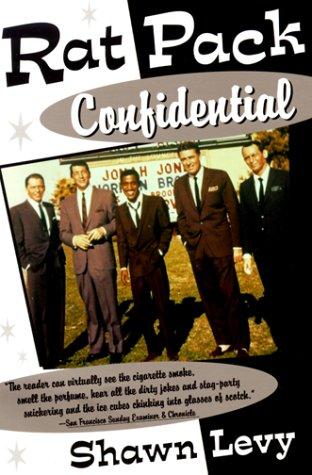
Rat Pack Confidential: Frank, Dean, Sammy, Peter, Joey and the Last Great Showbiz Party
Reconstructs night-by-night details of the January–February 1960 Copa Room Summit, Ocean's 11 filming, and Sinatra's Sands fallout.
View Hardcover on Amazon ↗
Viva Las Vegas: After-Hours Architecture
Examines Wayne McAllister's 1952 Indoor-Outdoor Desert Modernism alongside Martin Stern Jr.'s 1967 circular Sands Tower.
View Hardcover on Amazon ↗
The Green Felt Jungle
Details Jakie Freedman, Jack Entratter, Doc Stacher, and Frank Sinatra's licensed casino points inside the 1950s–1960s Sands.
View Hardcover on Amazon ↗
1945–1993 • Luxury Strip Origins
5 Photos

1955–1960 • Civil Rights & Westside Era
5 Photos

Moulin Rouge Hotel Las Vegas: 1955 Resort & 1960 Agreement
Read Article →
1950–2001 • Classic Strip & Hughes Era
5 Photos

Desert Inn Las Vegas History: Wilbur Clark & Howard Hughes
Read Article →
1958–2007 • Strip Icons
5 Photos

Stardust Hotel & Casino Las Vegas History (1958–2007)
Read Article →
