Frank Lefty Rosenthal Stardust True History Behind Casino
Read Article →
Stardust Hotel & Casino Las Vegas History: From Tony Cornero's 1958 Atomic Resort to the 2007 Implosion
The Stardust Resort and Casino opened at noon on July 2, 1958, at 3000 Las Vegas Boulevard South in Winchester, Nevada, debuting with 1,032 rooms and a 16,500-square-foot gaming floor as the largest resort hotel in the world. Begun in 1954 by California gambling-ship impresario Anthony "Tony" Cornero with architect Jack Miller and interior designer Jac Lessman, and completed after Cornero's death by John "Jake the Barber" Factor and Moe Dalitz's Desert Inn syndicate, the Stardust operated for 48 years until closing on November 1, 2006, and falling in a March 13, 2007 implosion where Resorts World Las Vegas stands today.
Unlike earlier Highway 91 properties that courted tuxedoed high rollers with $15-a-night bungalows, the Stardust pioneered high-volume mass-market tourism on the Las Vegas Strip. By pairing $6-a-night motel wings with Kermit Wayne's 216-foot Space Age neon facade and the imported French spectacle Lido de Paris, the property established the economic template that later sustained both its notorious 1970s Teamsters-financed skim era and Boyd Gaming's two-decade corporate stewardship.

Framing and concrete block work on Tony Cornero's low-rise Stardust motor-hotel wings along Las Vegas Boulevard South in 1954–1955, prior to the three-year construction freeze caused by Cornero's sudden death.
In This Article • 5 Archival Photographs
Click any photo to view full size
Archival Landmark Dossier
Street Address
3000 Las Vegas Boulevard South, Winchester, NV 89109
Opening Date
July 2, 1958 at 12:00 p.m. (1,032 original rooms)
Architects & Sign Designers
Jack Miller & Jac Lessman; Kermit Wayne (YESCO, 1958); Paul Miller (Ad Art, 1968)
Founders & Operators
Tony Cornero, John & Rella Factor, Moe Dalitz, Argent Corp, Boyd Gaming
Closed & Imploded
Closed November 1, 2006; imploded March 13, 2007 at 2:33 a.m. (428 lbs explosives)
Site Today
Resorts World Las Vegas (opened June 24, 2021)
When Did Tony Cornero Start Building the Stardust and How Did He Die in 1955?
Anthony "Tony" Cornero Stralla arrived on Highway 91 after two decades of defying California authorities from the decks of the SS Rex, an offshore gambling barge anchored three miles beyond Santa Monica Bay during the late 1930s. Convinced that post-war middle-class motorists wanted affordable Las Vegas rooms rather than country-club exclusivity, Cornero acquired a 36-acre desert tract on the west side of the Strip in early 1954. He initially announced the project as the Starlight before adopting the name Stardust, commissioning graphic artist Grace Silver in 1954 to create its jagged Atomic Age logotype while architect Jack Miller laid out sprawling two-story concrete-block room wings behind a wide roadside casino pavilion.
Lacking institutional bank backing, Cornero personally sold $1,000-to-$10,000 shares of Stardust Inc. stock across Nevada and Southern California, raising roughly $6 million from more than 2,000 small investors. You can examine these original framing stages in the Stardust archival photograph collection. By summer 1955, escalating payroll and material bills pushed construction costs past $7.8 million, leaving Cornero desperately short of cash with the complex roughly 70 percent finished.
On the morning of July 31, 1955, the 55-year-old developer walked across Highway 91 to shoot craps at Wilbur Clark's Desert Inn. After losing approximately $10,000 at the dice pit and sipping an iced drink, Cornero slumped over the craps rail at 11:17 a.m. and died of an acute myocardial infarction. Federal tax liens, mechanics' claims, and shareholder lawsuits immediately froze the unfinished Stardust site for nearly three years.

Tony Cornero’s Stardust under construction, 1954-1955. Undated photos.
How Did Jake Factor and Moe Dalitz Open the Stardust on July 2, 1958?
Rescue arrived through Rella Factor and her husband, John "Jake the Barber" Factor, half-brother of Hollywood cosmetics magnate Max Factor and a Prohibition-era Chicago confidence figure with deep ties to the Outfit. Working through creditor negotiations in 1956 and 1957, the Factors consolidated approximately $4.3 million in claims and assumed title to the dormant Stardust real estate, paying off small stockholders in stages while pouring fresh capital into interior designer Jac Lessman's showroom and casino finishes.
Because John Factor's federal mail-fraud conviction prevented him from holding a Nevada gaming license, Rella Factor leased the Stardust's hotel and casino operations for $100,000 per month to United Hotels Corporation, the operating syndicate behind the Desert Inn led by Moe Dalitz, Morris Kleinman, Sam Tucker, Allard Roen, and nominal frontman Wilbur Clark. When Nevada Governor Charles H. Russell cut the ribbon at 12:00 p.m. on July 2, 1958, the $10 million Stardust opened 1,032 air-conditioned rooms priced from $6 per night, a 105-foot-long Big Dipper swimming pool, and a 24-hour drive-in screen visible from the rear parking lot.
Within months of opening, Dalitz's group solved its convention-space shortage by absorbing the financially distressed Royal Nevada Hotel immediately to the north. Opened on April 19, 1955, with a distinctive neon crown over its entrance, the 235-room Royal Nevada had bled cash during the mid-1950s Strip room glut; by 1959, its casino was converted into the Stardust Auditorium convention center and its hotel wings became the Stardust North Annex, pushing combined capacity to nearly 1,300 rooms.

Tony Cornero’s Stardust under construction, 1954-1955. They came up from L.A.
Who Designed the Stardust's 1958 Atomic Facade and 1968 Roadside Sign?
Nine months after the Soviet Union launched Sputnik 1 in October 1957, the Stardust unveiled the most celebrated Space Age facade in American roadside architecture. Designed by Kermit Wayne at the Young Electric Sign Company (YESCO), the 1958 building-front sign stretched 216 feet horizontally across the entire casino porte-cochere and rose 37 feet above the roofline. At its center spun a 16-foot-diameter translucent acrylic Earth globe encircled by three-dimensional ringed planets, cosmic rays, and jagged constellations that mirrored 1950s Nevada atomic-test fascination. Illuminating that galactic panorama required 7,100 feet of neon tubing, more than 1.3 miles, paired with 11,000 incandescent bulbs wired to flash outward in radiating bursts visible three miles down Highway 91.
As neighboring high-rises began competing for long-range sightlines in the mid-1960s, management commissioned a freestanding roadside pylon to anchor the curb along Las Vegas Boulevard. Erected in February 1968 by designer Paul Miller of Ad Art in Stockton, California, the new Stardust roadside spectacular soared 188 feet into the desert sky and spanned nearly 90 feet across. Miller suspended the jagged "STARDUST" name beneath a cascading shower of multi-colored, four-pointed pastel starbursts that sequenced downward toward the readerboard.
In 1991, Boyd Gaming replaced the vintage space-age script on the 1968 pylon with clean block serif letters, provoking widespread lament among architectural historians such as Alan Hess and Robert Venturi. Following the resort's 2006 closure, the Neon Museum rescued the 188-foot pylon's giant red letters and 27 starburst sculptures, restoring and re-illuminating key sections inside its downtown Las Vegas Neon Boneyard.

Tony Cornero’s Stardust under construction, 1954-1955. to check things out.” - Richard Rovere.
Why Did Lido de Paris Run for 32 Years Inside the Café Continental Showroom?
To fill 1,032 rooms every night, Moe Dalitz and entertainment producer Donn Arden bypassed expensive celebrity solo singers (who demanded $25,000 to $50,000 a week at the neighboring Riviera Hotel & Casino) and made the production show itself the headliner. Licensing the concept directly from Pierre Louis-Guérin and René Fraday's Champs-Élysées cabaret in Paris, the Stardust spent $250,000 outfitting Jac Lessman's 700-seat Café Continental with twin hydraulic elevator stages, a sub-stage swimming tank, an indoor ice-skating surface, and an overhead rain curtain.
Ça C'est L'Amour, the inaugural edition of Lido de Paris, premiered on opening night July 2, 1958, with a cast of 70 European dancers, acrobats, and tall English Bluebell Girls dressed in feathered headdresses and topless couture costumes. Over the next three decades, 12 successive Lido editions staged sinking ships, simulated volcanic eruptions, indoor snowstorms, and real onstage waterfalls for the price of a dinner minimum.
The Café Continental also launched the Las Vegas Strip careers of German-born illusionists Siegfried Fischbacher and Roy Horn, who debuted a specialty magic act inside Lido de Paris in 1970 and returned to headline the revue from 1978 to 1981 before moving to the Frontier and later The Mirage. After more than 22,000 performances seen by an estimated 19 million patrons, Lido de Paris lowered its final curtain on February 26, 1991, replaced by Boyd Gaming's modernized production Enter the Night.

Tony Cornero’s Stardust under construction, 1954-1955. Stardust’s Atomic-Age logotype was designed by Grace Silver in 1954.
How Did Allen Glick, Frank Rosenthal, and the Mob Skim Operate at the Stardust (1974–1983)?
Corporate ownership arrived briefly in 1969 when Parvin-Dohrmann Company bought the Stardust from Dalitz's group for $15 million, adding a nine-story East Tower (originally completed in 1964) and renaming its parent entity Recrion Corporation after federal securities inquiries. In May 1974, 32-year-old San Diego real estate attorney Allen R. Glick acquired Recrion (including the Stardust, Fremont, Marina, and Hacienda) using $62.75 million in loans from the Teamsters Central States, Southeast and Southwest Areas Pension Fund through his newly formed Argent Corporation.
Unknown to the public at the time, Midwestern organized crime families in Chicago, Kansas City, Milwaukee, and Cleveland controlled Pension Fund approvals and installed Chicago sports handicapper Frank "Lefty" Rosenthal to run day-to-day Stardust operations, while enforcer Anthony "Tony the Ant" Spilotro guarded the syndicate's street interests. Shifting through titles from food-and-beverage director to talk-show host after regulators denied his gaming license in 1976, Rosenthal built the opulent 300-seat Stardust Race and Sports Book, ushering legal Nevada sports wagering into its modern era and more than doubling casino profits.
Meanwhile, FBI wiretaps in Kansas City later proved that count-room crews systematically diverted between $7 million and $15 million in untaxed cash and coins before counting scales recorded the drop. After state regulators placed Argent's casinos under receivership and transitional operators Al Sachs and Herb Tobman themselves lost licenses over lingering skimming lapses in 1983–1984, Sam and Bill Boyd's local firm Boyd Gaming stepped in during March 1985 to purchase the Stardust and Fremont in a $165 million transaction. Restoring clean balance sheets, Boyd Gaming hired Marnell Corrao Associates to build the 32-story, 1,500-room West Tower, which opened in 1991 alongside a 35,000-square-foot convention center.
When Did the Stardust Close and What Replaced It After the 2007 Implosion?
By the mid-2000s, multi-billion-dollar luxury resorts such as Wynn Las Vegas had transformed north Strip real estate values, prompting Boyd Gaming to announce on January 4, 2006, that it would raze the aging Stardust to build Echelon Place, a $4.8 billion multi-hotel complex. Following a tearful 24-hour farewell celebration attended by longtime sports bettors and retired showgirls, Hawaiian singer Don Ho's former stagehands and Boyd executives escorted the last patrons onto Las Vegas Boulevard when the Stardust permanently locked its doors at 12:00 p.m. on November 1, 2006.
Four months later, at 2:33 a.m. on March 13, 2007, Controlled Demolition, Inc. orchestrated one of the largest blasts in the Las Vegas Strip casino implosions timeline. Preceded by a Zambelli Internationale fireworks display that spelled out countdown numerals down the facade, 428 pounds of dynamite and linear shaped charges severed steel columns across both the nine-story 1964 East Tower and the 32-story 1991 West Tower, collapsing the complex into a 60-foot debris pile in under 10 seconds.
Construction on Echelon Place halted abruptly in August 2008 when credit markets froze during the Great Recession, leaving bare concrete elevator cores exposed along the Strip for five years. In March 2013, Malaysia-based Genting Group purchased the 87-acre property from Boyd Gaming for $350 million. Adapting several Echelon structural foundations, Genting opened the $4.3 billion, 3,506-room Resorts World Las Vegas on June 24, 2021, installing a restored starburst-and-globe neon tribute sign on its property perimeter to honor the 1958 Stardust.
| Date | Milestone at 3000 Las Vegas Blvd S | Key Figures & Specs |
|---|---|---|
| 1954 – July 31, 1955 | Tony Cornero breaks ground; dies at Desert Inn craps table | 36-acre parcel; $6M+ raised from small stockholders; 70% built |
| July 2, 1958 | Stardust Resort & Casino officially opens at noon | John & Rella Factor, Moe Dalitz; 1,032 rooms; 216-ft YESCO facade |
| 1958 – 1959 | Adjacent 1955 Royal Nevada Hotel absorbed | 235 rooms added as North Annex; casino converted to convention hall |
| February 1968 | Roadside starburst pylon sign erected along the Strip | Designed by Paul Miller (Ad Art); 188 ft tall; saved at Neon Museum |
| May 1974 – 1983 | Argent Corporation acquisition and Mob skim era | Allen Glick ($62.75M Teamsters loan), Frank Rosenthal, Tony Spilotro |
| March 1985 – Feb 1991 | Boyd Gaming buyout; Lido de Paris closes; West Tower opens | $165M package deal; Lido ends Feb 26, 1991; 32-story Marnell Corrao tower |
| Nov 1, 2006 – Mar 13, 2007 | Permanent noon closure and 2:33 a.m. controlled implosion | 428 lbs explosives (CDI); Genting opens $4.3B Resorts World June 24, 2021 |
Frequently Asked Questions
Where can you see the original Stardust neon sign in Las Vegas today?
Surviving components of the February 1968 188-foot roadside Stardust pylon sign, including the giant block letters installed in 1991 and 27 metal four-pointed starbursts, are preserved on permanent outdoor display at The Neon Museum (770 Las Vegas Boulevard North). Kermit Wayne's earlier 1958 216-foot Sputnik-era building facade was dismantled during late-1960s and 1991 remodelings and does not survive intact.
Was the movie Casino filmed at the real Stardust Hotel?
No. Although Nicholas Pileggi's 1995 book and Martin Scorsese's film Casino dramatized Frank "Lefty" Rosenthal's 1974–1983 tenure running the Stardust under the fictional name "Tangiers," Boyd Gaming declined interior filming and had already modernized the floor. Scorsese instead shot the six-week casino interior schedule overnight inside the nearby Riviera Hotel and Casino in autumn 1994.
How many rooms did the Stardust have when it opened in 1958 versus when it closed in 2006?
When the Stardust opened on July 2, 1958, it boasted 1,032 low-rise motel-style rooms, expanding past 1,265 rooms after absorbing the neighboring Royal Nevada in 1959 and adding the nine-story East Tower in 1964. After Boyd Gaming built the 32-story West Tower in 1991 and phased out older motor-court wings in 1999, the resort operated roughly 1,552 rooms at closure.
What sits on the former Stardust site on the Las Vegas Strip today?
Resorts World Las Vegas occupies the 87-acre former Stardust parcel at 3000 Las Vegas Boulevard South. After Boyd Gaming imploded the Stardust on March 13, 2007, and halted its $4.8 billion Echelon Place project in August 2008, Genting Group bought the unfinished site for $350 million in March 2013 and opened the $4.3 billion, 3,506-room Resorts World complex on June 24, 2021.
Curated Historical Bibliography
Recommended Las Vegas History Books
Recommended historical books and architectural studies covering this landmark. As an Amazon Associate, LasVegasArchive.com earns from qualifying purchases.
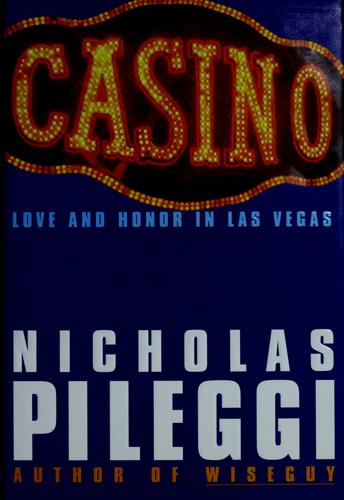
Casino: Love and Honor in Las Vegas
Documents Allen Glick's Argent Corporation, Frank Rosenthal's Stardust Race & Sports Book, and the count-room skim between 1974 and 1983.
View Hardcover on Amazon ↗
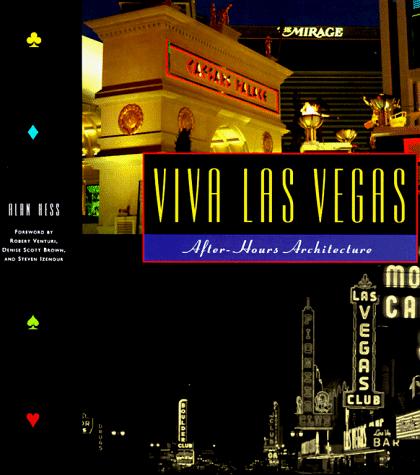
Viva Las Vegas: After-Hours Architecture
Analyzes Kermit Wayne's 216-foot YESCO Sputnik-era Stardust facade and Paul Miller's 1968 pylon in the evolution of Strip architecture.
View Hardcover on Amazon ↗
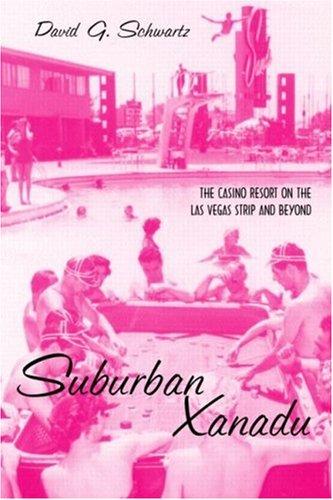
Suburban Xanadu: The Casino Resort on the Las Vegas Strip and Beyond
Places Tony Cornero and Moe Dalitz's high-volume 1,032-room Stardust business model in the economic history of the Las Vegas Strip.
View Hardcover on Amazon ↗
Mob Skim & Gaming Control • 1974–1988
5 Photos

1955–2016 • Strip Icons
5 Photos

Riviera Hotel & Casino Las Vegas History (1955–2016)
Read Article →
1993–2024 • Strip Megaresort Era
5 Photos

Las Vegas Casino Implosions Timeline: Every Blast (1993–2024)
Read Article →
1955–1993 • Strip Icons
5 Photos

Dunes Hotel & Casino Las Vegas History (1955–1993)
Read Article →
