Landmark Hotel Las Vegas: Space-Age Tower & 1995 Implosion
Read Article →
Desert Inn Las Vegas History: Wilbur Clark, Moe Dalitz, and Howard Hughes's 1966 Penthouse Takeover
Wilbur Clark's Desert Inn opened on April 24, 1950, at 3145 Las Vegas Boulevard South after Miami Beach architect Hugh Taylor completed a 300-room country-club resort rescued by Cleveland syndicate financier Moe Dalitz, and it operated for fifty years before closing on August 28, 2000, and imploding its main Augusta Tower on October 23, 2001, to clear the site for Wynn Las Vegas. Positioned directly across Highway 91 from the Last Frontier and Silver Slipper, the fifth resort on the Las Vegas Strip replaced rustic cowboy timber with International Style stonework, a panoramic third-floor Sky Room, and an 18-hole championship golf course.
No property on the Strip bridged Las Vegas's organized-crime origins and its Wall Street corporate future more directly than the Desert Inn. Built with illegal Ohio and Kentucky casino profits from Dalitz's Mayfield Road Gang, the resort became the secluded ninth-floor headquarters of aviation billionaire Howard Hughes on Thanksgiving Eve, November 23, 1966, a midnight tenancy that produced Hughes's $13.25 million buyout of Dalitz, catalyzed Nevada's Corporate Gaming Acts of 1967 and 1969, and launched a $300 million resort-buying spree across Clark County.

Acrobat act the Wayne-Marlin Trio photographed beneath the roadside marquee of Wilbur Clark's Desert Inn in October 1950, six months after the resort debuted on US Highway 91.
In This Article • 5 Archival Photographs
Click any photo to view full size
Archival Landmark Dossier
Street Address
3145 Las Vegas Boulevard South, Winchester, NV
Original Opening
April 24, 1950 (5th resort on Highway 91)
Founders & Backers
Wilbur Clark & Moe Dalitz's Cleveland Syndicate (74%)
Original Architect
Hugh Taylor (with Jac Lessman interiors; Martin Stern Jr. 1963 tower)
Howard Hughes Buyout
Announced March 1, 1967 (effective April 1) for $13.25 million
Closure & Implosion
Closed August 28, 2000; Augusta Tower imploded October 23, 2001 (now Wynn Las Vegas)
Why Did Wilbur Clark Sell 74% of the Desert Inn to Moe Dalitz's Cleveland Syndicate?
Former San Diego bartender and craps dealer Wilbur Clark arrived on US Highway 91 in 1944 as an operating partner at El Rancho Vegas before selling his stake in 1946 to build his own luxury hotel two miles south. Backing the project with $250,000 in personal capital alongside his brother Harold Clark, he broke ground in May 1947 at 3145 Las Vegas Boulevard South on a 170-acre desert tract. Postwar steel, copper, and skilled-labor inflation quickly exhausted Clark's cash reserves, leaving bleached wooden framing stalled along the highway for nearly nineteen months through 1948 and early 1949.
Facing foreclosure liens, Clark traveled east and struck a rescue partnership in mid-1949 with Morris "Moe" Dalitz, Morris Kleinman, Sam Tucker, and Thomas J. McGinty, veteran Prohibition bootleggers known as Cleveland's Mayfield Road Gang, who operated Northern Kentucky's plush, illegal Beverly Hills Country Club outside Cincinnati. Dalitz and his Ohio partners injected $3.2 million toward the final $4.5 million construction tab in exchange for a controlling 74 percent equity stake, leaving Clark and his original minority backers with 26 percent.
Recognizing that an affable, clean-cut host reassured both tourists and the Nevada Tax Commission far better than Midwestern racketeers, Dalitz retained Clark as nominal president, social greeter, and face of the house. Every matchbook, chip, and highway billboard carried the title "Wilbur Clark's Desert Inn," establishing an operational division in which Clark worked the showroom floor while Dalitz, Kleinman, Tucker, and floor boss Allard Roen ran the casino cage, credit lines, and count room.

A sign painter details a roadside promotional rendering of Wilbur Clark's proposed Desert Inn circa 1947, shortly before capital shortages halted framing for nearly two years.
What Defined Architect Hugh Taylor's April 24, 1950 Opening and the Sky Room?
Architect Hugh Taylor, assisted by New York interior designer Jac Lessman, abandoned Spanish stucco and frontier wagon wheels in favor of low-slung Mid-Century Modern horizontality. Clad in rough-cut Arizona flagstone, redwood louvers, and pastel desert-green stucco, the three-story main pavilion radiated into landscaped two-story garden wings framing an Olympic-scale swimming pool and fountain plaza. Visitors can inspect original opening-month cash deliveries and executive interiors in the Desert Inn archival photo collection.
On April 24, 1950, Clark and Dalitz staged a three-day, $50,000 invitational opening gala attended by 150 Hollywood columnists, state governors, and chartered planeloads of high rollers. Ventriloquist Edgar Bergen (performing with wooden dummy Charlie McCarthy) and Broadway star Vivian Blaine, fresh from originating Miss Adelaide in Guys and Dolls, headlined the 450-seat Painted Desert Showroom to music by Ray Noble's orchestra. Sixteen months later, in September 1951, Frank Sinatra made his Las Vegas Strip solo singing debut on that same Painted Desert stage.
Atop the three-story central core sat the glass-walled Sky Room lounge, the highest public vantage point on Highway 91 until the nine-story Riviera opened in April 1955. Beginning in January 1951, when atmospheric nuclear testing commenced 65 miles northwest at the Nevada Proving Grounds, the Desert Inn marketed predawn "Atomic Cocktail" parties in the Sky Room, where gamblers sipped drinks until mushroom-cloud flashes lit the Spring Mountains on the horizon, a phenomenon detailed in our history of 1950s Las Vegas atomic testing.

Cash delivery by Nevada Armored Transport Desert Inn, April 1950 Founded in ‘46, Nevada Armored Transport Inc. was the first Las Vegas-based armored service, originally headquartered downtown at 422 Fremont St.
How Did the PGA Tournament of Champions Elevate the Desert Inn Golf Course (1953–1966)?
To capture affluent winter vacationers who stayed a full week rather than overnight motorists passing between Los Angeles and Salt Lake City, Dalitz commissioned golf architect Lawrence Hughes to carve an 18-hole, par-72, 7,066-yard championship course directly behind the hotel rooms. Opened in 1952 across irrigated Bermuda fairways lined with thousands of transplanted palms and cottonwoods, the Desert Inn Country Club gave the Strip its first on-property resort links.
In April 1953, Desert Inn publicity director Eugene Murphy and Las Vegas Sun publisher Hank Greenspun inaugurated the PGA Tour's Tournament of Champions, restricting the field exclusively to golfers who had won an official tour event during the preceding twelve months. When inaugural winner Al Besselink sank his final putt in 1953, Clark and Dalitz wheeled a garden barrow overloaded with 10,000 gleaming silver dollars onto the 18th green, generating newsreel coverage in every major American market while donating gate proceeds to the Damon Runyon Memorial Fund for Cancer Research.
Between 1953 and 1966, the Desert Inn fairways hosted fourteen straight editions of the Tournament of Champions. Gene Littler captured three consecutive titles from 1955 through 1957, Sam Snead won in 1959, Arnold Palmer prevailed in 1962 and 1965, and Jack Nicklaus claimed back-to-back victories in 1963 and 1964. To house tournament galleries and convention VIPs, architect Martin Stern Jr. added the nine-story St. Andrews Tower in 1963, lifting total inventory past 600 rooms and installing private duplex penthouses on the eighth and ninth floors.

Wilbur Clark at his 2nd floor office at the Desert Inn, April 1950. Photo by J.R.
How Did Howard Hughes Arrive by Train in 1966 and Buy Out Moe Dalitz?
Before dawn on Wednesday, November 23, 1966, Thanksgiving Eve, a private Union Pacific Pullman railcar carrying 60-year-old aviation and film industrialist Howard Hughes rolled onto an unlit spur outside downtown Las Vegas. Having recently received a single $546,549,771 check from selling his 78 percent stake in Trans World Airlines (TWA), Hughes sought to shelter capital from California state income taxes while escaping East Coast press scrutiny in Boston. Carried off the railcar on a stretcher by aides to fool curious onlookers into assuming a medical transfer, Hughes entered the Desert Inn through a rear service door and rode a private elevator to the ninth floor.
Hughes initially leased the entire eighth floor for his security staff and Mormon executive secretaries and sealed himself inside a corner bedroom on the ninth floor for roughly $250 per night. Trouble erupted in mid-December 1966 when casino manager Allard Roen and Moe Dalitz informed Hughes's chief intermediary, former FBI agent Robert Maheu, that the ninth-floor suites had long been promised to high-rolling gamblers arriving for the lucrative New Year's Eve week. Hughes refused to vacate.
Rather than pack his trunks, Hughes instructed Maheu to negotiate an outright purchase of the hotel-casino. After weeks of hard bargaining with Dalitz, who recognized that federal organized-crime probes under Bobby Kennedy made a clean multi-million-dollar exit attractive, the deal was announced on March 1, 1967. At 12:01 a.m. on April 1, 1967, Hughes Tool Company took possession of the Desert Inn for $13.25 million, paying $6.25 million in cash and assuming $7 million in existing mortgage debt while retaining Dalitz as landlord of the underlying country-club real estate.

Desert Inn, October 1950. Acrobat act Wayne-Marlin Trio poses in front of the Desert Inn sign.
How Did Hughes's $300 Million Buying Spree Trigger Nevada's Corporate Gaming Acts?
For exactly four years, Hughes never stepped outside his blackout-curtained ninth-floor Desert Inn suite. Operating beneath bare fluorescent bulbs with Kleenex tissue boxes stacked as germ barriers, he dispatched midnight yellow legal-pad memos to Maheu directing a $300 million acquisition campaign across Nevada. Within twenty-four months of buying the Desert Inn, Hughes purchased the Sands ($14.6 million), the Frontier ($14 million), the Castaways ($3 million), the Silver Slipper ($5.4 million, acquired after Hughes complained that its rotating rooftop slipper light beamed through his blackout drapes), and the stalled Landmark tower ($17.3 million), alongside KLAS-TV Channel 8 so he could request overnight broadcasts of cold-war aviation movies.
Under pre-1967 Nevada gaming law, every single shareholder of a corporation owning a casino had to submit fingerprints, financial disclosures, and undergo an in-person background investigation, a rule that effectively barred publicly traded hotel chains and institutional banks from the Strip, leaving Teamsters pension loans and syndicate cash as the sole lenders. Eager to welcome Hughes's untainted fortune and rehabilitate Nevada's national reputation, Governor Paul Laxalt and state regulators waived Hughes's personal appearance when licensing the Desert Inn in March 1967.
Building on that precedent, the Nevada Legislature passed the Corporate Gaming Acts of 1967 and 1969, restricting mandatory background licensing to corporate officers, directors, and major controlling shareholders. Although Hughes slipped down a rear fire stair on Thanksgiving Eve, November 25, 1970, and flew out of Nellis Air Force Base to the Bahamas, never returning to Nevada before his death in 1976, the statutory reform catalyzed by his Desert Inn purchase opened the Strip immediately to Kirk Kerkorian, Barron Hilton, ITT Sheraton, and Wall Street bond financing.
What Happened to the Desert Inn Under Kirk Kerkorian, ITT Sheraton, and Steve Wynn?
After reorganizing Hughes's casino holdings under Summa Corporation in 1972, executives completed a $54 million overhaul in 1978 that demolished Hugh Taylor's original three-story Sky Room hub and erected the 15-story, 177-foot Augusta Tower. Financier Kirk Kerkorian's Tracinda Corporation acquired the Desert Inn operations in 1988 before selling the property to ITT Sheraton in 1993 for $160 million. Between 1995 and 1997, ITT Sheraton invested $200 million in a neoclassical Palm Beach architectural makeover, adding the nine-story Palms Tower, a grand domed lobby rotunda, and a lagoon pool complex, only to watch high-limit baccarat volume scatter across far larger 3,000-room Strip megaresorts.
| Date | Milestone | Key Figures & Architectural Impact |
|---|---|---|
| May 1947 | Initial Groundbreaking | Wilbur & Harold Clark begin framing at 3145 Las Vegas Blvd S; cash runs out in 1948. |
| April 24, 1950 | Resort Opening ($4.5M) | Moe Dalitz group invests $3.2M for 74%; Hugh Taylor's 300-room resort & Sky Room debut. |
| April 1953 | 1st Tournament of Champions | Al Besselink wins $10,000 in silver dollars on Lawrence Hughes's 18-hole golf course. |
| Nov 23, 1966 | Howard Hughes Arrives | Hughes arrives by Union Pacific railcar and leases the 8th and 9th penthouse floors. |
| April 1, 1967 | $13.25M Hughes Takeover | Hughes Tool Co. buys out Dalitz; sparks Nevada's 1967/1969 Corporate Gaming Acts. |
| 1978 & 1997 | Augusta & Palms Expansions | Summa builds the 15-story Augusta Tower (1978); ITT Sheraton spends $200M on remodel (1997). |
| Oct 23, 2001 | Augusta Tower Implosion | Steve Wynn buys property for $270M (April 2000), closes it Aug 28, 2000, and implodes main tower. |
On April 27, 2000, just weeks after selling Mirage Resorts to MGM Grand Inc., developer Steve Wynn personally purchased the 212-acre Desert Inn resort and golf course from Starwood Hotels & Resorts for $270 million, prizing its unmatched Strip frontage and private water rights. Wynn closed the casino at 2:00 a.m. on August 28, 2000. At 2:00 a.m. on October 23, 2001, Controlled Demolition Inc. detonated charges inside the 15-story Augusta Tower, bringing it down in seconds so Wynn could erect his bronze curved high-rise. Wynn used the surviving St. Andrews and Palms wings as project offices and an art gallery before imploding them on November 16, 2004, five months prior to the April 28, 2005 debut of the $2.7 billion Wynn Las Vegas.
Frequently Asked Questions
When did Howard Hughes live in the Desert Inn penthouse, and how did he leave?
Howard Hughes lived sealed inside the ninth-floor penthouse of the Desert Inn for exactly four years, arriving before dawn by private Union Pacific train car on Thanksgiving Eve, November 23, 1966, and departing in secret on Thanksgiving Eve, November 25, 1970. Aides carried the frail billionaire down a rear exterior fire escape on a stretcher into a waiting van and flew him from Nellis Air Force Base to Paradise Island in the Bahamas.
Why did Howard Hughes buy the Silver Slipper across the street from the Desert Inn?
In April 1968, Howard Hughes paid $5.4 million to buy the neighboring Silver Slipper casino at 3100 Las Vegas Boulevard South partly because its revolving, floodlit 13-foot neon slipper sign shone intermittently through a gap in his ninth-floor Desert Inn blackout curtains at night. Hughes also feared an intelligence agency or rival had hidden cameras inside the giant slipper pointed at his penthouse windows, and promptly shut off its rotation mechanism.
Which Desert Inn towers were imploded in 2001 versus 2004?
The Desert Inn came down in two separate demolitions engineered for Wynn Las Vegas construction phasing. Controlled Demolition Inc. imploded the 15-story, 177-foot Augusta Tower (built by Summa Corporation in 1978) at 2:00 a.m. on October 23, 2001. Steve Wynn kept the 1963 nine-story St. Andrews Tower, including Howard Hughes's former penthouse, and the 1997 Palms Tower standing for construction offices before imploding both structures on November 16, 2004.
Does any part of the original Desert Inn still exist at Wynn Las Vegas today?
Every original building from Wilbur Clark's 1950 Desert Inn and its 1963–1997 hotel towers was demolished between 2001 and 2004, though two legacies remain on the footprint. The 18-hole Wynn Golf Club occupies the exact land and historic groundwater wells established for Lawrence Hughes's 1952 Desert Inn Country Club, and Desert Inn Road, the major east-west arterial tunneling directly beneath the Strip, retains the resort's name.
Curated Historical Bibliography
Recommended Las Vegas History Books
Recommended historical books and architectural studies covering this landmark. As an Amazon Associate, LasVegasArchive.com earns from qualifying purchases.
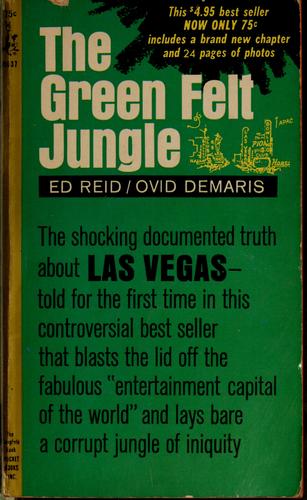
The Green Felt Jungle
Investigative 1963 exposé detailing how Moe Dalitz and Cleveland's Mayfield Road Gang financed and operated Wilbur Clark's Desert Inn.
View Hardcover on Amazon ↗
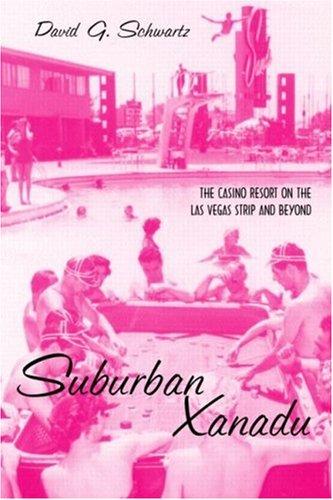
Suburban Xanadu: The Casino Resort on the Las Vegas Strip and Beyond
Explains how the Desert Inn's country-club golf layout and Howard Hughes's 1967 corporate buyout restructured Strip casino economics.
View Hardcover on Amazon ↗
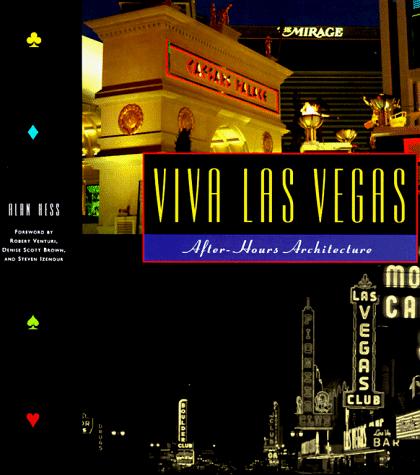
Viva Las Vegas: After-Hours Architecture
Analyzes Hugh Taylor's 1950 International Style pavilion and Martin Stern Jr.'s 1963 high-rise expansion within Strip design history.
View Hardcover on Amazon ↗
1961–1995 • Space-Age Las Vegas
5 Photos

1952–1996 • Strip Icons
5 Photos

Sands Hotel & Casino Las Vegas History: Copa Room & Rat Pack
Read Article →
1941–1960 • Highway 91 Pioneers
5 Photos

El Rancho Vegas History: First Strip Resort (1941–1960)
Read Article →
1989–2024 • Megaresort Era
5 Photos

The Mirage Las Vegas History (1989–2024): Volcano to Hard Rock
Read Article →
