Dunes Hotel & Casino Las Vegas History (1955–1993)
Read Article →
Las Vegas Casino Implosions Timeline (1993–2024): Dates, Dynamite & Replacements
Between October 27, 1993 and October 9, 2024, developers demolished 14 major Las Vegas casino-hotel landmarks (plus the small Bourbon Street annex) across 18 controlled explosive blasts, nearly all engineered by the Loizeaux family's Controlled Demolition, Inc. (CDI) of Phoenix, Maryland, to clear land for multi-billion-dollar Strip megaresorts, convention halls, and a Major League Baseball stadium. Initiated when Steve Wynn staged the 1993 destruction of the 23-story Dunes North Tower as a $1.5 million prime-time NBC television broadcast, the 31-year implosion era erased almost every first-generation high-rise built between 1952 and 1973.
Before 1993, obsolete Las Vegas gambling halls like the 1950 Silver Slipper or 1955 Moulin Rouge annexes either burned down or fell quietly under diesel excavators and steel wrecking balls. Once Wall Street debt enabled 3,000-room resorts sitting on 40-to-120-acre parcels, waiting twelve months for piece-by-piece high-reach mechanical dismantling cost tens of millions in construction loan interest, turning six seconds of nitroglycerin gelatin dynamite and copper linear shaped charges into both rapid site prep and free global television publicity.

Ed Screeton's 1955 Kodachrome view of the Dunes Hotel & Casino at Flamingo Road; thirty-eight years later, Steve Wynn's October 27, 1993 blast of its 23-story North Tower inaugurated the televised Strip implosion era.
In This Article • 5 Archival Photographs
Click any photo to view full size
Archival Landmark Dossier
First Casino Implosion
Dunes North Tower, October 27, 1993 (for Bellagio)
Most Recent Implosion
Tropicana Las Vegas, October 9, 2024 at 2:37 a.m. (for MLB ballpark)
Total Imploded Landmarks
14 major casino-resort demolition entries (18 blast events)
Primary Blast Engineers
Controlled Demolition, Inc. (CDI), Loizeaux family of Phoenix, MD
Tallest Imploded Tower
Stardust 32-story West Tower (354 ft), March 13, 2007
Notable Non-Implosion
The Mirage (closed July 2024; core preserved for Hard Rock remodel)
How Did Steve Wynn's October 27, 1993 Dunes Blast Invent the Televised Casino Implosion?
When Mirage Resorts chairman Steve Wynn purchased the bankrupt Dunes Hotel and Country Club for $75 million in late 1992, he simultaneously prepared to open his pirate-themed family resort, Treasure Island, a mile north on October 27, 1993. Rather than quietly dropping the 1961 23-story Dunes North Tower at dawn, Wynn hired CDI president Mark Loizeaux and Hollywood producer Ken Ehrlich to synchronize the demolition with an hour-long NBC television movie, Treasure Island: The Adventure Begins.
In front of an estimated 200,000 street spectators, Wynn ceremonialized the transition from mob-era Las Vegas to corporate spectacle: simulated cannon fire from Treasure Island's HMS Britannia appeared to strike across the Strip, triggering 395 pounds of gelatin dynamite packed into 430 drilled column boreholes, supplemented purely for Hollywood drama by 600 gallons of aviation fuel mixed with pyrotechnic mortars that engulfed the collapsing slab in a towering orange fireball. Nine months later, on July 20, 1994, CDI dropped the Dunes' remaining 17-story diamond-shaped South Tower without fanfare, clearing the 122-acre site for Bellagio (opened October 15, 1998).

Sands Hotel & Casino, 1952-1996 Photo: Debut headliner Danny Thomas, December 1952 Kit Carson Club (‘46-'50) Kit Carson Motel ('46-'64) La Rue nightclub ('50-'51) '46: Kit Carson Motel and Club are separate properties. Owners of both the motel and club changed in the following years.
Which Las Vegas Casinos Were Imploded Between 1993 and 2024?
Every controlled explosive hotel-casino demolition across the Las Vegas Strip, Convention Center corridor, and Fremont/Boulder Highway is reconciled below in chronological order, separating structural dynamite charges from theatrical pyrotechnics.
| # | Imploded Resort (Opened) | Exact Blast Date(s) & Time | Towers & Explosive Specs | What Replaced the Site |
|---|---|---|---|---|
| 1 | Dunes (1955) | Oct 27, 1993 (night) & July 20, 1994 | 23-story North Tower (~395 lbs dynamite + 600 gal jet fuel); 17-story South Tower. | Bellagio (opened Oct 15, 1998) |
| 2 | Landmark (1969) | Nov 7, 1995 • 5:37 a.m. | 31-story (346-ft) Space-Needle tower; ~100 lbs explosives (filmed for Mars Attacks!). | LVCC surface parking; now LVCC West Hall |
| 3 | Sands (1952) | Nov 26, 1996 • 2:16 a.m. | 17-story cylindrical 1965 tower; ~1,000 lbs gelatin dynamite (used in Con Air). | The Venetian (opened May 3, 1999) |
| 4 | Hacienda (1956) | Dec 31, 1996 • ~9:00 p.m. PST | 11-story towers; ~650 lbs dynamite on NYE TV; corner stub felled by wrecking ball Jan 1, 1997. | Mandalay Bay (opened March 2, 1999) |
| 5 | Aladdin (1966) | April 27, 1998 • 7:24 p.m. | 19-story tower; ~233 lbs explosives; original Theatre for the Performing Arts spared. | New Aladdin (2000); now Planet Hollywood |
| 6 | El Rancho / Thunderbird (1948) | Oct 3, 2000 • 2:30 a.m. | 13-story tower vacant since 1992; ~700 lbs dynamite. | Fontainebleau Las Vegas (opened Dec 13, 2023) |
| 7 | Desert Inn (1950) | Oct 23, 2001 (2:30 a.m.) & Nov 16, 2004 | 14-story Augusta Tower (2001, unpublicized post-9/11); St. Andrews & Palms Towers (2004). | Wynn Las Vegas (2005) & Encore (2008) |
| 8 | Castaways / Showboat (1954) | Jan 11, 2006 • 2:42 a.m. | 19-story tower at 2800 Fremont St.; ~400 lbs explosives. | Vacant for years; later apartment complex |
| 9 | Bourbon St. & Boardwalk (1980 / 1966) | Feb 14, 2006 & May 9, 2006 (2:33 a.m.) | 9-story Bourbon St. (~150 lbs) & 16-story Boardwalk Holiday Inn (~415 lbs dynamite). | Parking garage (Bourbon St.); CityCenter / Aria (Boardwalk) |
| 10 | Stardust (1958) | March 13, 2007 • 2:33 a.m. | 32-story West Tower & 9-story East Tower; 428 lbs dynamite + fireworks. | Stalled Echelon; Resorts World (opened June 2021) |
| 11 | New Frontier (1942) | Nov 13, 2007 • 2:37 a.m. | 16-story Atrium Tower; 1,040 lbs dynamite + 1,000+ pyrotechnic shells. | Vacant 25-acre Alon / Wynn West land parcel |
| 12 | Clarion / Debbie Reynolds (1970) | Feb 10, 2015 • 2:44 a.m. | 12-story tower on Convention Center Dr.; elevator shaft survived blast until pulled down Feb 22. | Cleared parcel slated for Majestic Las Vegas |
| 13 | Riviera (1955) | June 14, 2016 & Aug 16, 2016 (2:37 a.m.) | 24-story Monaco Tower (June); Monte Carlo & San Remo Towers (Aug) by CDI. | LVCC West Hall & Diamond Lot (opened 2021) |
| 14 | Tropicana (1957) | Oct 9, 2024 • 2:37 a.m. | 22-story Paradise (steel) & Club (concrete) Towers; ~2,870 lbs combined charges + 555 drones. | Planned MLB Athletics Ballpark & Bally's resort |
Notice how little explosive weight actually fells a reinforced-concrete hotel: gravity performs 99 percent of the structural work once sequential millisecond-delay detonators kick out the lower three floors of load-bearing columns, whereas towering orange fireballs at the Dunes, New Frontier, and Tropicana came strictly from non-structural pyrotechnics rigged for television cameras.

Landmark Hotel & Casino Landmark tower, unfinished, December 1963. Photo by Bernard Gotfryd.
How Did the 1995–2000 Blasts Erase the Landmark, Sands, Hacienda, Aladdin & El Rancho?
Once the Dunes proved that implosions cleared high-rise concrete cores in under ten seconds, Strip operators accelerated teardowns across the mid-1990s. At 5:37 a.m. on November 7, 1995, the Las Vegas Convention and Visitors Authority used fewer than 100 pounds of explosives to topple Frank Carroll and Howard Hughes's 31-story Landmark tower, whose saucer-shaped steel dome folded cleanly onto its concrete stem while Tim Burton's camera crews rolled film for Mars Attacks!.
One year later, at 2:16 a.m. on November 26, 1996, billionaire convention magnate Sheldon Adelson stood beside old-time Copa Room alumni as CDI detonated roughly 1,000 pounds of gelatin dynamite inside Martin Stern Jr.'s 17-story cylindrical Sands tower to make way for The Venetian. Just thirty-five days after the Sands fell, Circus Circus Enterprises blew up Doc Bayley's 1956 Hacienda on New Year's Eve, December 31, 1996 during a national Fox prime-time telecast, producing the Strip's first famous partial misfire when a mangled four-story corner section refused to pancake and had to be battered down with cranes and wrecking balls on New Year's Day 1997 before Mandalay Bay broke ground.
Prime-time crowds returned at 7:24 p.m. on April 27, 1998 for the 1966 Aladdin tower (sparing only its detached Performing Arts theater, now Bakkt/PH Live), followed on October 3, 2000 by the quiet 2:30 a.m. implosion of the shuttered El Rancho (1948 Thunderbird).

Riviera Hotel & Casino 1955-2015 Construction of the Riviera, 1954. 22, Casa Blanca gaming license granted to the Gensburg bros, Harpo & Gummo Marx, and others.
Why Did the 2007 Stardust & New Frontier Implosions Precede a Decade of Empty Strip Lots?
Clark County air-quality regulators and Las Vegas Metropolitan Police eventually shifted implosions from evening prime time to 2:30 a.m. Tuesday morning windows so prevailing desert winds could disperse pulverized silica and concrete dust before commuter rush hour (and after strict asbestos abatement stripped every interior pipe and floor tile down to bare structural frames). Following Steve Wynn's unannounced post-9/11 implosion of the Desert Inn's Augusta Tower in October 2001 (and its remaining two towers in November 2004), an easy-credit real estate frenzy triggered five blasts across twenty-two months in 2006–2007.
After Castaways, Bourbon Street, and the Boardwalk fell in early 2006, Boyd Gaming imploded the 32-story West Tower of the Stardust, the tallest casino hotel ever dropped by explosives in Las Vegas, at 2:33 a.m. on March 13, 2007 with 428 pounds of dynamite. Eight months later, on November 13, 2007, Elad Group packed 1,040 pounds of dynamite into the 16-story New Frontier Atrium Tower to clear ground for a planned $5 billion Plaza Las Vegas.
Within months, the 2008 global financial crisis froze credit markets cold. Boyd's replacement project, Echelon Place, stalled as a rusted concrete skeleton for over a decade before Genting Group finished the site as Resorts World Las Vegas in June 2021, while the 25-acre New Frontier lot still sits unbuilt nearly two decades after its blast. Meanwhile, off the Strip at 305 Convention Center Drive on February 10, 2015, non-CDI contractors imploded the 12-story Clarion Hotel (formerly Royal Americana, Paddlewheel, and the Debbie Reynolds Hollywood Hotel), only to watch its heavily reinforced central concrete elevator core remain defiantly upright in the dust cloud, requiring twelve days of torch cuts and steel cables to pull it over on February 22.

Construction of the Tropicana, Las Vegas, 1955-1957 Tropicana began when Ben Jaffe (Bond Estates), a partner in Miami’s Fontainebleau hotel, bought the 40 acre site in 1955. Architect M.
How Did the October 2024 Tropicana Blast Compare with the Non-Imploded Mirage?
Eight years after CDI dropped the Riviera's Monaco and Monte Carlo towers in June and August 2016 for the Las Vegas Convention Center West Hall, two Strip icons closed within ninety days of each other in 2024, illustrating the exact structural calculus separating implosion from gut-remodeling.
At the south end of the Strip (3801 Las Vegas Boulevard South), Bally's Corporation shuttered the 67-year-old Tropicana Las Vegas on April 2, 2024 to clear nine acres of the 35-acre corner for a planned 33,000-seat Major League Baseball stadium for the relocating Athletics. Because the 22-story Club Tower (reinforced concrete) and 22-story Paradise Tower (structural steel frame) featured incompatible floor-to-ceiling heights and footprints for a ballpark concourse, CDI drilled 1,130 boreholes holding 1,421 pounds of dynamite in the Club Tower and wrapped 219 structural steel cut points in the Paradise Tower with 1,451 linear feet of copper-clad RDX shaped charges. Preceded by a 555-drone light show and fireworks, both Tropicana towers collapsed in 22 seconds at 2:37 a.m. on October 9, 2024.
Three miles north, when Hard Rock International closed Steve Wynn's 1989 Mirage on July 17, 2024, engineers reached the opposite verdict. Because the Mirage's 30-story Y-shaped reinforced concrete tower already possessed modern ceiling heights, life-safety risers, and 3,000 wide guest bays, Hard Rock kept the structural tower intact for a floor-by-floor interior strip-out while mechanically excavating only the streetfront volcano lagoon to erect a new 660-foot glass Guitar Hotel tower scheduled for 2027.
Frequently Asked Questions
Why do almost all modern Las Vegas casino implosions happen around 2:30 a.m.?
Starting with the November 1996 Sands blast, Clark County officials, air-quality engineers, and Metro Police standardized casino implosions between 2:15 a.m. and 2:45 a.m. on midweek mornings (almost always Tuesdays). That window minimizes Strip vehicular and pedestrian closures, cuts McCarran/Harry Reid Airport flight-path holds to minutes, and gives desert winds three hours before dawn to disperse concrete dust prior to morning rush hour.
Which Las Vegas casino implosion failed to knock down the whole building?
Two Las Vegas casino implosions left stubborn vertical remnants standing when the smoke cleared. On New Year's Eve, December 31, 1996, a four-story corner stub of the Hacienda Hotel survived the blast and required crane-swung wrecking balls on January 1, 1997. Even more famously, on February 10, 2015, the 12-story concrete elevator core of the Clarion (former Debbie Reynolds Hotel) remained standing upright until cables pulled it down twelve days later.
Was the original 1973 MGM Grand or The Mirage ever imploded?
Neither resort was ever imploded. Kirk Kerkorian's original 1973 MGM Grand at Flamingo Road and the Strip was repaired after its tragic November 1980 fire, operated as Bally's Las Vegas from 1986 to 2022, and still operates today inside its original towers as Horseshoe Las Vegas. Similarly, when The Mirage closed in July 2024, Hard Rock International retained its 30-story structural concrete tower for interior rebuilding rather than using explosives.
Who engineers Las Vegas casino implosions and how is asbestos handled before the blast?
Nearly every major Strip implosion from the 1993 Dunes to the 2024 Tropicana was engineered by Controlled Demolition, Inc. (CDI), founded by the Loizeaux family of Phoenix, Maryland. Under strict federal EPA NESHAP and Clark County Air Quality mandates, owners must spend six to nine months before any blast mechanically stripping out all asbestos insulation, drywall, glass, wiring, and plumbing until only a bare steel or concrete skeleton remains.
Curated Historical Bibliography
Recommended Las Vegas History Books
Recommended historical books and architectural studies covering this landmark. As an Amazon Associate, LasVegasArchive.com earns from qualifying purchases.
Super Casino: Inside the 'New' Las Vegas
Documents the corporate megamerger economics of the 1990s that drove Mirage Resorts, Circus Circus, and Venetian developers to implode first-generation Strip hotels.
View Hardcover on Amazon ↗
Suburban Xanadu: The Casino Resort on the Las Vegas Strip and Beyond
Traces the complete life cycle of postwar Strip resort architecture from low-rise 1940s motor courts to post-1993 high-rise replacement.
View Hardcover on Amazon ↗
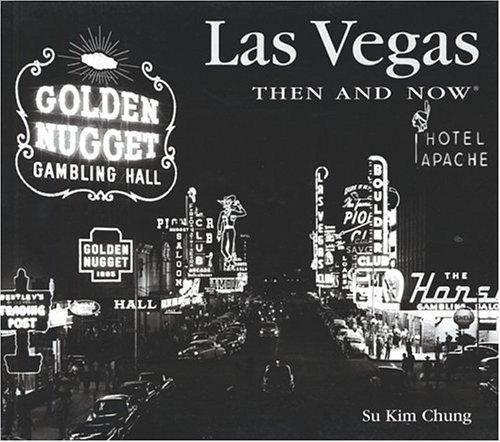
Las Vegas Then and Now
Pairs historical UNLV archival photographs of demolished landmarks like the Sands, Dunes, Stardust, and Riviera directly against the megaresorts occupying their footprints.
View Hardcover on Amazon ↗
1955–1993 • Strip Icons
5 Photos

1957–2024 • Strip Icons
5 Photos

Tropicana Las Vegas History (1957–2024): Mob Era to Implosion
Read Article →
1961–1995 • Space-Age Las Vegas
5 Photos
Landmark Hotel Las Vegas: Space-Age Tower & 1995 Implosion
Read Article →
1959–Present • Roadside Landmarks
5 Photos

Welcome to Fabulous Las Vegas Sign History & Betty Willis
Read Article →
