El Rancho Vegas History: First Strip Resort (1941–1960)
Read Article →
Flamingo Las Vegas History: Billy Wilkerson, Bugsy Siegel, and the 1946 Highway 91 Opening
The Flamingo Hotel opened its casino on December 26, 1946, at 3555 Las Vegas Boulevard South, not as a sudden desert vision by gangster Benjamin "Bugsy" Siegel, but on a 33-acre US Highway 91 parcel purchased in early 1945 by Hollywood Reporter founder William R. "Billy" Wilkerson and designed by Los Angeles Modernist architect George Vernon Russell before Siegel's last surviving 1946 Oregon Suite wing was demolished on December 14, 1993. Forced by wartime material shortages and personal gambling debts to sell two-thirds of the project to Meyer Lansky and Siegel in February 1946, Wilkerson watched Siegel commandeer construction, quadruple the budget to $6 million, and stage a rain-drenched opening failure.
Six months later, on the night of June 20, 1947, rifle blasts through a Beverly Hills window ended Siegel's life at age 41, and within twenty minutes, syndicate lieutenants Gus Greenbaum and Moe Sedway walked into the Flamingo lobby to claim management. Under Greenbaum's disciplined oversight, the completed resort netted over $4 million in 1948, proving that European-style Modernist luxury on Highway 91 generated far higher returns than cowboy motels.

The sleek, flat-roofed Modernist lines of the Flamingo Hotel along US Highway 91 in late 1946, breaking sharply with Las Vegas's earlier Western timber-and-stucco architecture.
In This Article • 5 Archival Photographs
Click any photo to view full size
Archival Landmark Dossier
Street Address
3555 Las Vegas Boulevard South, Paradise, NV
True Originator
William R. "Billy" Wilkerson (purchased 33 acres early 1945)
Architects & Builder
George Vernon Russell & Richard Stadelman; Del E. Webb Construction Co.
Dual Opening Dates
December 26, 1946 (casino flop) & March 1, 1947 (full hotel reopening)
Siegel Assassination
June 20, 1947 at 810 N. Linden Dr., Beverly Hills (final cost: $6 million)
Original Wing Razed
December 14, 1993 (demolition of Siegel's fortified Oregon Suite building)
Did Bugsy Siegel Invent the Flamingo, or Was Billy Wilkerson the True Founder?
Popular cinema, most famously Barry Levinson's 1991 biopic Bugsy, portrays Benjamin Siegel stopping in the Mojave Desert, dreaming up a luxury oasis from scratch, and naming it "The Flamingo" after his fiery girlfriend Virginia Hill's long legs. Archival deeds and architectural drawings tell a completely different chronology: Siegel neither selected the site, conceived the European resort model, nor originated the hotel's name.
In early 1945, four years after El Rancho Vegas and Hotel Last Frontier established Western ranch lodges farther north on Highway 91, Hollywood Reporter publisher William R. "Billy" Wilkerson paid $84,000 to landowner Margaret Folsom for 33 acres seven miles south of Fremont Street. As the creator of Sunset Strip nightspots Cafe Trocadero, Ciro's, and La Rue, Wilkerson understood that postwar movie stars and wealthy industrialists preferred tuxedoed continental glamour over hitching posts and sawdust floors. Wilkerson named the project the Flamingo in 1945 after the exotic pink birds he admired at Florida's Hialeah Park racetrack, months before Siegel entered the partnership.
Wilkerson commissioned Caltech-educated Los Angeles Modernist architect George Vernon Russell to draft an air-conditioned resort modeled on Monte Carlo and Miami Beach: cantilevered flat roofs, floor-to-ceiling plate glass, imported marble baths, a health spa, tennis courts, specialty boutiques, a showroom without Western kitsch, and a discreetly integrated Monte Carlo casino.

Flamingo Hotel, 1946: Opened December 26, 1946 on Highway 91 by Billy Wilkerson and Benjamin "Bugsy" Siegel, introducing luxury resort architecture and the iconic pink neon champagne tower to the Las Vegas Strip.
How Did Bugsy Siegel and Meyer Lansky Take Control of the $6 Million Del Webb Build?
By late winter 1945–1946, Wilkerson's original $1.2 million to $1.5 million construction estimate had collapsed. Post-World War II federal price controls and housing priorities created severe black-market shortages of structural steel, copper pipe, hardwood, and plaster, while Wilkerson simultaneously dropped hundreds of thousands of dollars gambling in downtown Fremont Street clubs. Desperate for $1 million in immediate completion financing without surrendering creative vision to conservative banks, Wilkerson accepted an introduction through G. Harry Rothberg in February 1946 to East Coast syndicate financier Meyer Lansky.
Forming the Nevada Projects Corporation, Lansky and Eastern mob investors put up $1 million for two-thirds of the equity, installing Lansky's childhood New York partner Benjamin "Bugsy" Siegel, already stationed in Los Angeles overseeing Trans-America Race Wire operations, to protect their investment. Instead of remaining a silent backer, Siegel muscled Wilkerson off the job site by June 1946 (ultimately buying out Wilkerson's remaining stake under duress while Wilkerson fled briefly to Paris), replaced perfectionist architect George Vernon Russell with Fort Worth architect Richard Stadelman, and took personal command over Phoenix general contractor Del E. Webb Construction Company.
Project superintendent L.C. Jacobson and Del Webb watched helplessly as Siegel's impulsiveness and contractor kickbacks sent costs spiraling from $1.5 million to an unprecedented $6 million. Insisting that every one of the 105 luxury rooms contain its own private sewer line and imported marble bathroom, Siegel ordered completed walls torn down on whims and paid inflated invoices for black-market palm trees, some of which unscrupulous haulers reportedly dug up at night from the rear of the lot and resold to Siegel at the front gate the following morning.

Flamingo Hotel, 1946: Opened December 26, 1946 on Highway 91 by Billy Wilkerson and Benjamin "Bugsy" Siegel, introducing luxury resort architecture and the iconic pink neon champagne tower to the Las Vegas Strip.
Why Did the December 26, 1946 Flamingo Opening Fail Before Its March 1947 Reopening?
Pressured by East Coast syndicate investors, who gathered at Lansky's December 1946 Havana Conference suspecting that Siegel and Virginia Hill were skimming millions into Swiss accounts, Siegel forced the Flamingo casino, lounge, and showroom to open on the night after Christmas, December 26, 1946, even though the three-story hotel guest wings remained unfinished shells. Readers can compare original 1946 signage with the 1947 rework in the Flamingo archival photo collection.
Everything went wrong on opening night. Unseasonal winter rainstorms lashed Los Angeles and Las Vegas, grounding the chartered DC-3 airliners Wilkerson and Siegel had booked to fly Clark Gable, Lana Turner, Joan Crawford, and dozens of MGM stars across the mountains. Comedian Jimmy Durante, bandleader Xavier Cugat, singer Rose Marie, and Siegel's friend George Raft performed and mingled before local townspeople and drenched motorists tracking desert mud across plush carpets while air-conditioning ducts failed.
Worse still lay at the gaming tables. Because the Flamingo had zero finished bedrooms to house winners overnight, high rollers rode luck streaks to $300,000 in house losses during the first week and checked into beds up Highway 91 at El Rancho Vegas and the Last Frontier, taking Siegel's working bankroll with them. Bleeding cash daily, Siegel shut down the casino in early February 1947, waited for Del Webb's crews to finish the guest suites, and quietly reopened on March 1, 1947, rebranded as "The Fabulous Flamingo." By May 1947, with rooms keeping players on property around the clock, the ledger finally turned positive.

Flamingo Hotel, 1946: Opened December 26, 1946 on Highway 91 by Billy Wilkerson and Benjamin "Bugsy" Siegel, introducing luxury resort architecture and the iconic pink neon champagne tower to the Las Vegas Strip.
What Happened Night-Of When Bugsy Siegel Was Assassinated on June 20, 1947?
Spring profits arrived too late to absolve Siegel of $4.5 million in cost overruns and suspected construction theft. At approximately 10:45 p.m. on Friday, June 20, 1947, as 41-year-old Siegel sat reading the morning Los Angeles Times on a floral sofa beside associate Allen Smiley inside Virginia Hill's rented Spanish Colonial home at 810 North Linden Drive in Beverly Hills (Hill was conveniently in Europe), an unseen assailant rested a .30-caliber M1 military carbine on a rose trellis outside the window and fired nine rounds. Four shots struck Siegel, two in the head, killing him instantly in an unsolved gangland execution.
Events 270 miles northeast on Highway 91 proved the hit came from inside Siegel's own partnership. Barely twenty minutes after shots rang out in Beverly Hills, before California wire services flashed bulletins across Nevada, Lansky associates Moe Sedway, Gus Greenbaum, and Morris Rosen walked calmly into the Flamingo lobby, summoned the night manager, and announced that they now controlled the hotel-casino.
Lansky tapped Gus Greenbaum, a gruff, universally respected Phoenix bookmaker and race-wire operator who had helped bankroll El Rancho Vegas expansions, to run the Flamingo as president. Eliminating Siegel's erratic spending while adding 200 moderately priced garden rooms, low-cost package flights from Southern California, and tight pit supervision, Greenbaum cleared more than $4 million in net profit during his first twelve months of 1948, triggering the 1950–1958 Strip building stampede that produced the Desert Inn, Sands, Riviera, Dunes, Tropicana, and Stardust.

Postcard of the Flamingo from around the time it opened in 1946, or early ‘47. The neon sign was changed in advance of their March ‘47 reopening.
How Did the 1953 Champagne Tower, Kirk Kerkorian, and the 1993 Demolition Reshape the Flamingo?
Following a 1953 exterior modernization under general manager Gus Greenbaum (shortly before Greenbaum left to open the Riviera in 1955), the Flamingo unveiled one of Highway 91's defining landmarks: a 105-foot cylindrical open-frame steel tower wrapped in stacked coral-pink and magenta neon rings that blinked upward in sequence like rising champagne bubbles, visible for miles across the desert floor. In 1955, hotelier Albert Parvin and Miami hoteliers Morris Lansburgh and Daniel Lifter led a $9 million syndicate buyout during which Meyer Lansky quietly pocketed a secret $200,000 "finder's fee" later exposed by 1960s federal skimming indictments.
In August 1967, self-made Las Vegas charter-airline tycoon Kirk Kerkorian purchased the Flamingo for $12.5 million, using its casino and accounting departments as an executive training ground, under president Alex Shoofey and Fred Benninger, before opening the 1969 International Hotel and the original 1973 MGM Grand right across Flamingo Road. Barron Hilton's Hilton Hotels Corporation bought controlling interest between 1970 and 1972, renaming the property the Flamingo Hilton in 1974 and constructing six stepped high-rise towers between 1977 and 1995 that expanded capacity past 3,500 rooms, alongside replacing the 1953 Champagne Tower in 1968 and 1976 with giant feathered pink-and-orange neon marquees.
For nearly five decades, one physical relic of 1946 survived behind the modern casino towers: the four-story concrete Oregon Building, whose top floor housed Bugsy Siegel's private fortress apartment complete with six-inch reinforced concrete walls, steel-lined shutters, false closets, and a secret trapdoor ladder leading down to an underground getaway garage. On December 14, 1993, Hilton wrecking cranes demolished the Oregon Building to construct the final tower wing and the lush 15-acre Wildlife Habitat courtyard, home to live Chilean flamingos, leaving zero original 1946 structures standing on the parcel today.
What Is the Complete Chronology of the Flamingo Hotel (1945–1993)?
Reviewing the Flamingo's documented milestones clarifies the exact handoffs from Billy Wilkerson's Sunset Strip blueprint to syndicate cash and modern corporate hospitality.
| Date | Milestone | Principals & Historical Outcome |
|---|---|---|
| Early 1945 | 33-Acre Land Purchase | Billy Wilkerson buys Highway 91 site for $84,000; hires architect George Vernon Russell. |
| Feb–June 1946 | Syndicate Buy-In | Meyer Lansky & Bugsy Siegel invest $1M for 67% of Nevada Projects Corp.; Del Webb builds. |
| Dec 26, 1946 | Premature Casino Opening | Rainstorms ground Hollywood flights; unfinished hotel rooms lead to $300k+ opening losses. |
| March 1, 1947 | Full Hotel Reopening | Reopens with 105 finished suites as "The Fabulous Flamingo"; turns profitable by May. |
| June 20, 1947 | Siegel Assassination | Siegel shot dead in Beverly Hills; Sedway & Gus Greenbaum take over, netting $4M in 1948. |
| 1953 & 1967 | Champagne Tower & Kerkorian | 105-ft bubbling neon Champagne Tower debuts (1953); Kirk Kerkorian buys resort for $12.5M (1967). |
| Dec 14, 1993 | Oregon Suite Demolished | Flamingo Hilton razes Siegel's fortified 1946 apartment wing for final tower & Wildlife Habitat. |
In 1999, Hilton spun off its gaming division into Park Place Entertainment (later Caesars Entertainment), which dropped the "Hilton" suffix in 2000, returning the Strip's oldest continuously operating resort brand to its historic name, Flamingo Las Vegas.
Frequently Asked Questions
Why was the Flamingo Hotel named the Flamingo?
Despite mob legend claiming Bugsy Siegel named the casino after girlfriend Virginia Hill's nickname for her long legs, original founder Billy Wilkerson named the Flamingo in 1945, before Siegel invested a dime. According to Wilkerson's contemporaneous Hollywood Reporter notes and family archives, he chose the name after watching flocks of bright pink Caribbean flamingos on the infield lakes at Florida's Hialeah Park racetrack.
Did Bugsy Siegel live to see the Flamingo make a profit?
Yes, briefly. After losing roughly $300,000 following the rain-soaked December 26, 1946 casino debut and closing for three weeks in February 1947, the Flamingo reopened with finished guest rooms on March 1, 1947, and posted roughly $250,000 to $300,000 in net operating profit across May 1947, though far too little to repay the $6 million construction tab before Siegel's June 20, 1947 murder.
What was inside Bugsy Siegel's fortified suite in the Oregon Building?
Located on the fourth floor of the 1946 Oregon Building wing, Siegel's private apartment featured reinforced poured-concrete walls resistant to rifle fire, heavy steel security doors, panoramic sightlines over the Highway 91 driveway, a custom marble bathroom with gold-plated fixtures, and a concealed hallway trapdoor ladder dropping straight into a basement garage where a chauffeured getaway car sat fueled at all hours.
Do any original 1946 buildings remain at the Flamingo Las Vegas today?
No physical structure from the December 26, 1946 opening remains standing at 3555 Las Vegas Boulevard South. Earlier 1940s and 1950s low-rise motel wings and the 1953 Champagne Tower were cleared during 1960s–1980s expansions, and the final 1946 structure, the four-story Oregon Building housing Siegel's suite, was demolished on December 14, 1993, where a memorial plaque now stands in the garden courtyard.
Curated Historical Bibliography
Recommended Las Vegas History Books
Recommended historical books and architectural studies covering this landmark. As an Amazon Associate, LasVegasArchive.com earns from qualifying purchases.
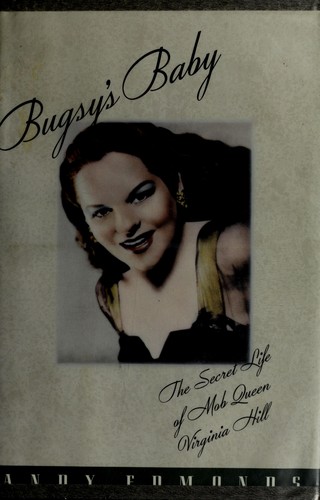
Bugsy's Baby: The Secret Life of Mob Queen Virginia Hill
Traces Virginia Hill and Benjamin Siegel's turbulent partnership from 1946 Flamingo construction overruns to 810 North Linden Drive.
View Hardcover on Amazon ↗
Suburban Xanadu: The Casino Resort on the Las Vegas Strip and Beyond
Demonstrates how Billy Wilkerson's Sunset Strip sensibility and Gus Greenbaum's 1948 management forged the modern Strip business model.
View Hardcover on Amazon ↗
Viva Las Vegas: After-Hours Architecture
Examines George Vernon Russell's Modernist Flamingo blueprints and the 1953 Champagne Tower's break from frontier cowboy themes.
View Hardcover on Amazon ↗
The Green Felt Jungle
Details the Lansky-Parvin-Lansburgh ownership transfers and hidden skimming investigations at the post-Siegel Flamingo.
View Hardcover on Amazon ↗
1941–1960 • Highway 91 Pioneers
5 Photos

1950–2001 • Classic Strip & Hughes Era
5 Photos

Desert Inn Las Vegas History: Wilbur Clark & Howard Hughes
Read Article →
1973–Present • Strip Megaresorts
5 Photos

Original 1973 MGM Grand Las Vegas: History, 1980 Fire & Bally's
Read Article →
Highway 91 & Strip History • 1942–2007
5 Photos

Hotel Last Frontier Las Vegas History: New Frontier & Strike
Read Article →
