Welcome to Fabulous Las Vegas Sign History & Betty Willis
Read Article →
Hacienda Hotel Las Vegas History: Doc Bayley’s Airline Resort, 64-Day Flight & 1996 Implosion
Opened in June 1956 at 3950 Las Vegas Boulevard South by California motel entrepreneur Warren “Doc” Bayley and his wife Judith “Judy” Bayley from plans by architect Homer Rissman, the $6 million Hacienda Hotel and Casino anchored the isolated southern gateway of U.S. Highway 91 for forty years. After pioneering all-inclusive charter airline junkets and sponsoring the unbroken 64-day world flight endurance record, the resort closed on December 1, 1996 and was imploded on live national television on New Year’s Eve, December 31, 1996 to clear the site for Mandalay Bay.
Standing in open creosote desert two miles south of Tropicana Avenue and just yards north of where Betty Willis’s Welcome to Fabulous Las Vegas sign rose in 1959, the Hacienda could not rely on foot traffic or passing Strip cruisers. Instead, Doc and Judy Bayley reengineered Las Vegas tourism for middle-class families, operating a captive fleet of piano-lounge airliners, keeping room rates low by skipping high-priced showroom singers, and mounting aviation’s most improbable endurance feat above the Mojave Desert.

Hacienda Hotel & Casino ‘56-'96 Photos:
In This Article • 5 Archival Photographs
Click any photo to view full size
Archival Landmark Dossier
Location
3950 Las Vegas Boulevard South (present-day Mandalay Bay site)
Opened
June 1956 ($6 million motor-court resort, 266 initial rooms)
Founders & Architect
Warren “Doc” Bayley & Judith “Judy” Bayley; Homer Rissman (Architect)
Aviation Milestone
64 days, 22 hrs, 19 min, 5 sec nonstop flight (Dec. 4, 1958–Feb. 7, 1959)
Landmark Sign
60-foot YESCO Horse and Rider by Raul Rodriguez (1967, now on Fremont St)
Closed & Imploded
Closed December 1, 1996; imploded New Year’s Eve, December 31, 1996
Why Did Warren “Doc” Bayley and Judy Bayley Build the Hacienda Two Miles South of the Strip?
Originally broken ground in 1954 as the proposed Lady Luck Hotel by developer Carlton Adair with mid-century modern architect Homer Rissman, the construction site at 3950 Las Vegas Boulevard South stalled when Nevada gaming regulators balked at hidden East Coast syndicate ties among early backers. California newspaper columnist turned motel operator Warren “Doc” Bayley (who already ran successful Hacienda motor hotels in Fresno, Bakersfield, and Indio) bought out the troubled partners, rebranded the project the Hacienda, and invested $6 million to finish Rissman’s sprawling, two-story garden-wing resort.
When the Hacienda’s 266 guest rooms and swimming pools opened in June 1956 (followed that autumn by its cleared casino floor), veteran Strip bosses predicted rapid bankruptcy. The resort sat two miles south of the under-construction Tropicana and nearly five miles south of Sahara Avenue, surrounded by bare gravel and McCarran Field flight paths. Rather than bidding $25,000 a week for Rat Pack crooners, Bayley eliminated costly headliner showrooms altogether, marketed oversized swimming pools and miniature golf to California motorists, and funneled savings into aggressive package promotions.
Following Warren Bayley’s death from a cerebral hemorrhage on December 26, 1964, Judith “Judy” Bayley assumed sole control of the resort. Until her death from cancer in December 1971, she reigned as the first sole female casino owner-operator on the Las Vegas Strip, earning the moniker “The First Lady of Gambling” while donating millions to establish the Judy Bayley Theatre at the University of Nevada, Las Vegas (UNLV).

Hacienda Hotel & Casino ‘56-'96 Photos:
How Did Hacienda Airlines Invent the $27.50 All-Inclusive Las Vegas Fly-and-Stay Junket?
To solve the Hacienda’s geographic isolation, Doc Bayley bypassed highway distance entirely by launching Hacienda Airlines in partnership with charter carrier U.S. Overseas Airlines and aviation manager Henry Price. Beginning in 1957, Southern Californians could purchase a round-trip “Champagne Flight” from Burbank or Long Beach for $27.50 per person, a single voucher covering airfare, airport shuttle directly to 3950 Las Vegas Boulevard South, one hotel night, a prime-rib or buffet dinner, free champagne, golf green fees, and $5 to $10 in non-negotiable casino chip coupons.
As demand exploded across San Francisco, Phoenix, Denver, and Chicago, Hacienda’s painted fleet swelled to nearly thirty piston airliners, including Douglas DC-3s, four-engine DC-4s, and pressurized Lockheed Constellations fitted with onboard cocktail lounges and bolted-down upright pianos for mid-flight sing-alongs. By 1961, Hacienda flights were delivering more than 150,000 captive guests a year directly to the casino cage.
Rival commercial carriers complained to Washington regulators that a hotel casino was running an unlicensed scheduled airline. After protracted hearings, the Civil Aeronautics Board (CAB) ordered Hacienda Airlines to cease public ticketed schedules in 1962, though Bayley’s fly-in package model permanently established the casino junket blueprint later adopted across the Strip.

Hacienda Hotel & Casino ‘56-'96 Photos:
How Did Bob Timm and John Cook Fly the Hacienda Cessna 172 Nonstop for 64 Days?
In 1956, Hacienda slot-machine mechanic and former World War II B-24 bomber pilot Robert “Bob” Timm pitched Doc Bayley an audacious $100,000 publicity stunt paired with a charity drive for the Damon Runyon Cancer Fund: break the 1949 world flight endurance record of 46 days, 20 hours in a single-engine plane emblazoned with HACIENDA across its fuselage. After three mechanical false starts in 1957 and autumn 1958, Timm teamed up with McCarran aircraft mechanic John Wayne Cook aboard a heavily modified 1956 Cessna 172 (manufacturer serial 36772, famous under FAA registration N9172B and cross-recorded in flight logs as N9217B).
Mechanics stripped the four-seat cabin down to the pilot’s chair and a 4-by-4-foot foam sleeping pad, plumbed an auxiliary 95-gallon belly fuel tank, rigged a collapsible stainless-steel sink, and cut an accordion-style starboard door platform so a harnessed crewman could lean outside to wipe oil off the windshield or change spark plugs in flight. Lifting off from McCarran Field at 3:52 p.m. on December 4, 1958, with white paint striped across the main tires so aviation judges could verify the wheels never touched earth, Timm and Cook orbited the Nevada, California, and Arizona deserts through Christmas and New Year’s.
Twice a day across 128 mid-air transfers, a ground crew closed a straight desert stretch of highway along the California-Arizona border near Blythe (and alternate Alamo Highway flats), racing a modified Ford pickup truck at 65 miles per hour directly beneath the Cessna skimming twenty feet off the asphalt. Cook winched up a fuel hose to pump aviation gas while hauling up thermos flasks of chopped steak, water, clean towels, and comic books from the Hacienda kitchen. Despite generator failures, fuel-pump glitches, a 36-second accidental autopilot nap by an exhausted Timm at 4,000 feet, and soot-fouled cylinders that barely held altitude, the pair touched down at McCarran Field on February 7, 1959 after 64 days, 22 hours, 19 minutes, and 5 seconds (~150,000 miles), a crewed flight endurance record never broken. Restored in 1988, the actual Hacienda Cessna 172 hangs permanently above Terminal 1 baggage claim at Harry Reid International Airport.

Hacienda Hotel & Casino ‘56-'96 Photos:
Where Can You See the 1967 Hacienda Horse and Rider Neon Sign Today?
Eleven years after opening, Judy Bayley commissioned Young Electric Sign Company (YESCO) designer Raul Rodriguez, later famed for Pasadena Tournament of Roses floats, to create a towering roadside emblem beside Betty Willis’s Welcome to Fabulous Las Vegas sign. Installed in 1967 at 3950 Las Vegas Boulevard South, the 60-foot-tall Hacienda Horse and Rider depicted a Spanish caballero in an ornate bolero jacket holding silver reins atop a rearing palomino stallion, outlined in warm gold, ruby, and white neon tubes with sequential chasing borders.
When Circus Circus Enterprises scheduled the Hacienda’s demolition in 1996, YESCO and civic preservationists rescued the caballero from the scrap heap. Refurbished at YESCO’s Las Vegas shop and hoisted onto a concrete pylon above the intersection of Fremont Street and Las Vegas Boulevard in November 1996, the Hacienda Horse and Rider became the very first outdoor landmark installed by the newly formed Neon Museum, where it continues to shine nightly over Downtown’s Fremont East gateway.

Hacienda Hotel & Casino ‘56-'96 Photos:
How Did Argent Corporation, Paul Lowden, and Magician Lance Burton Shape the Hacienda’s Later Decades?
Following Judy Bayley’s death at age 56 in December 1971, her estate sold the Hacienda in 1972 to San Diego attorney Allen Glick, who folded it into Argent Corporation in 1974 alongside the Stardust, Fremont, and Marina using Teamsters Central States Pension Fund loans overseen behind the scenes by Frank “Lefty” Rosenthal. Under state licensing pressure, Glick sold the Hacienda in 1977 to former lounge keyboardist turned casino executive Paul Lowden (Sahara Casino Partners), who built an 11-story hotel tower in 1980 that pushed total inventory above 800 rooms and added camperland RV hookups.
After early-1970s topless ice revues such as Spice on Ice, the Hacienda’s Fiesta Showroom hit an artistic peak in June 1991 when Lowden handed Louisville, Kentucky sleight-of-hand champion Lance Burton creative control over his own headline production. Performing ten shows a week for tickets under $30, Burton logged more than 1,500 Fiesta Showroom performances over five years, transforming close-up dove and card manipulation into a blockbuster Strip draw before moving into a custom $27 million theater at the new Monte Carlo in June 1996.
| Year / Period | Milestone at 3950 Las Vegas Blvd S | Key Figures | Historical Impact |
|---|---|---|---|
| June 1956 | Hacienda Hotel & Casino Opens | Warren & Judy Bayley; Homer Rissman | $6M, 266-room motor-court resort pioneers family pools and budget Strip lodging two miles south of Tropicana Ave. |
| 1957–1962 | Hacienda Airlines Junkets | Doc Bayley & Henry Price | $27.50 all-inclusive DC-3, DC-4, and Lockheed Constellation piano-lounge flights carry 150,000+ guests yearly. |
| Dec. 4, 1958–Feb. 7, 1959 | World Flight Endurance Record | Bob Timm & John Cook (Cessna N9172B) | 64 days, 22 hours, 19 minutes, 5 seconds aloft with 128 highway truck refuelings; record remains unbroken. |
| 1964–1971 | First Sole Female Strip Owner | Judith “Judy” Bayley | Runs resort solo after Doc Bayley’s death; funds UNLV’s flagship Judy Bayley Theatre; adds 1967 Horseman sign. |
| 1972–1989 | Argent Corp. & Lowden Expansion | Allen Glick; Paul Lowden | Part of Teamsters-funded Argent portfolio (1974–77) before Lowden adds 11-story 1980 hotel tower. |
| 1991–1996 | Fiesta Showroom Magic Residency | Lance Burton | Over 1,500 performances turn Lance Burton into Las Vegas’s premier solo stage illusionist. |
| Dec. 31, 1996 | Live NYE Implosion for Mandalay Bay | Circus Circus Enterprises | Purchased for $80M (1995), closed Dec. 1, 1996, and imploded on Fox TV for $950M Mandalay Bay. |
What Happened During the Hacienda’s Live New Year’s Eve Implosion on December 31, 1996?
With Excalibur (1990) and Luxor (1993) drawing millions of pedestrians to Tropicana Avenue just north of the Hacienda, Circus Circus Enterprises paid Paul Lowden’s Sahara Gaming $80 million in March 1995 for the Hacienda alongside $73 million for an adjoining 74-acre parcel to assemble a south-Strip tropical megaresort district. The Hacienda dealt its final blackjack hand and locked its doors at 4:00 p.m. on December 1, 1996, just south of the Welcome to Fabulous Las Vegas sign corridor.
Thirty days later, at 9:00 p.m. Pacific Time on December 31, 1996, timed to strike midnight Eastern Time live on Fox’s national New Year’s Eve Live broadcast, Controlled Demolition, Inc. triggered sequential charges and pyrotechnics across the 40-year-old complex before more than 200,000 Strip spectators. As dust cleared beneath the floodlights, viewers spotted a stubborn multi-story concrete corner of the 1980 tower still leaning defiantly upright; heavy excavators and wrecking balls pulled the surviving skeleton down on New Year’s Day 1997. On March 2, 1999, the $950 million, 43-story Mandalay Bay Resort and Casino opened on the exact Hacienda footprint.
Frequently Asked Questions
What casino replaced the Hacienda Hotel in Las Vegas?
Mandalay Bay Resort and Casino replaced the Hacienda at 3950 Las Vegas Boulevard South. Circus Circus Enterprises (later Mandalay Resort Group) purchased the Hacienda for $80 million in March 1995, closed the property on December 1, 1996, imploded its towers on New Year’s Eve, December 31, 1996, and opened the $950 million Mandalay Bay on March 2, 1999.
Where is the Hacienda Cessna 172 endurance airplane displayed today?
The original 1956 Cessna 172 (airframe serial 36772, painted with tail number N9172B) flown nonstop by Robert Timm and John Cook for 64 days, 22 hours, 19 minutes, and 5 seconds from December 4, 1958 to February 7, 1959 hangs suspended from the ceiling above the Terminal 1 baggage claim hall at Harry Reid International Airport in Las Vegas, curated by the Howard W. Cannon Aviation Museum.
Who was Judy Bayley in Las Vegas history?
Judith “Judy” Bayley (1915–1971) co-founded the Hacienda Hotel in June 1956 with her husband Warren “Doc” Bayley and became the first woman to solely own and operate a Las Vegas Strip hotel-casino after his death in December 1964. Known as “The First Lady of Gambling,” she championed civil rights and arts philanthropy, funding UNLV’s Judy Bayley Theatre.
Did part of the Hacienda remain standing after its 1996 New Year’s Eve implosion?
Yes. During the live Fox broadcast at 9:00 p.m. PST on December 31, 1996, engineered blasts collapsed almost all of the Hacienda complex, but a reinforced elevator and stairwell corner of the 11-story 1980 tower stayed partially standing once the smoke cleared. Demolition crews knocked down the remaining concrete stub with mechanical equipment on January 1, 1997.
Curated Historical Bibliography
Recommended Las Vegas History Books
Recommended historical books and architectural studies covering this landmark. As an Amazon Associate, LasVegasArchive.com earns from qualifying purchases.
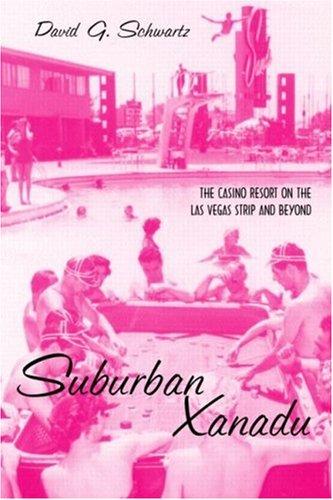
Suburban Xanadu: The Casino Resort on the Las Vegas Strip and Beyond
Examines how Doc and Judy Bayley’s motor-court layout and charter airline packages democratized Strip vacations for middle-income families.
View Hardcover on Amazon ↗
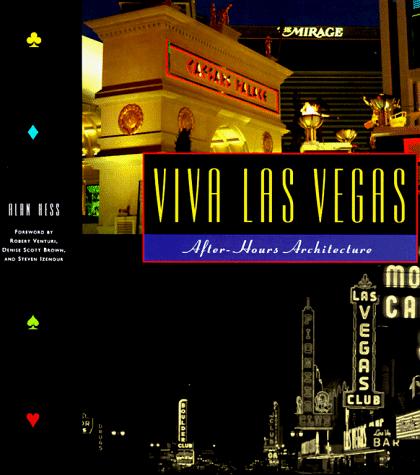
Viva Las Vegas: After-Hours Architecture
Places Homer Rissman’s 1956 Hacienda architecture and Raul Rodriguez’s 1967 YESCO Horse and Rider sign inside Las Vegas’s commercial design canon.
View Hardcover on Amazon ↗
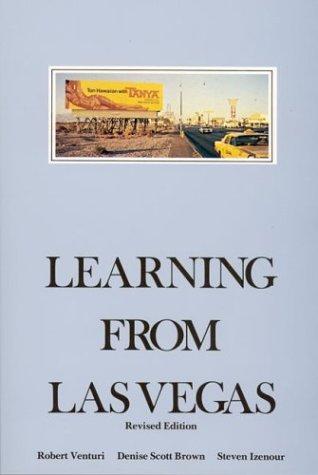
Learning from Las Vegas: The Forgotten Symbolism of Architectural Form
Analyzes late-1960s Highway 91 roadside persuasion, giant pylon signs, and low-slung casino sheds from the Hacienda north to Sahara Avenue.
View Hardcover on Amazon ↗
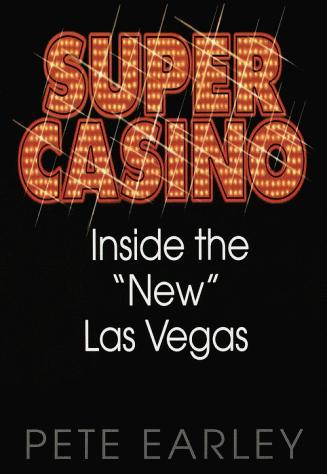
Super Casino: Inside the 'New' Las Vegas
Chronicles Circus Circus Enterprises’ mid-1990s south-Strip master plan that cleared the Hacienda to build Mandalay Bay next to Luxor.
View Hardcover on Amazon ↗
1959–Present • Roadside Landmarks
5 Photos

Mob Skim & Gaming Control • 1974–1988
5 Photos

Frank Lefty Rosenthal Stardust True History Behind Casino
Read Article →
1993–2024 • Strip Megaresort Era
5 Photos

Las Vegas Casino Implosions Timeline: Every Blast (1993–2024)
Read Article →
1958–2007 • Strip Icons
5 Photos

Stardust Hotel & Casino Las Vegas History (1958–2007)
Read Article →
