The Mirage Las Vegas History (1989–2024): Volcano to Hard Rock
Read Article →
Dunes Hotel & Casino Las Vegas History: From the 1955 Sultan of Baghdad to the 1993 Pirate Implosion
The Dunes Hotel and Casino opened on May 23, 1955, at 3650 Las Vegas Boulevard South on the southwest corner of Flamingo Road, built for $3.5 million by Rhode Island movie-theater executive Alfred Gottesman alongside partners Bob Rice and Joe Sullivan to an Arabian Nights design by architects John Replogle and Robert Dorr Jr. Celebrated for its 30-foot rooftop Sultan statue, Las Vegas's first topless showgirls in 1957, and Milton Schwartz's 24-story diamond-plan tower, the resort closed on January 26, 1993, and was imploded by Steve Wynn on October 27, 1993, to make way for Bellagio.
Standing at the southern edge of mid-century Strip development, the Dunes was mocked before opening day as "Gottesman's Folly" before rebranding itself as the "Miracle in the Desert." Over 38 years, its 164-acre hotel and championship golf complex bridged the gap between Highway 91 motor courts and modern themed megaresorts, culminating in the first choreographed casino implosion spectacle in Las Vegas history.

Summer 1954 Las Vegas News Bureau construction view of the original low-rise Dunes complex rising on bare desert caliche at the southwest corner of Flamingo Road and Highway 91.
In This Article • 5 Archival Photographs
Click any photo to view full size
Archival Landmark Dossier
Street Address
3650 Las Vegas Boulevard South (SW corner of Flamingo Rd)
Opening Date
May 23, 1955 (200 original rooms; $3.5 million cost)
Architects
John Replogle & Robert Dorr Jr. (1955); Milton M. Schwartz (1964–1965)
Signature Landmarks
30-ft Sultan statue, 180-ft Arabian neon sign, 24-story Diamond Tower
Closed & Imploded
Closed January 26, 1993; North Tower imploded October 27, 1993
Site Today
Bellagio Resort & Casino (opened October 15, 1998)
Why Was the Dunes Called the "Miracle in the Desert" When It Opened on May 23, 1955?
When Providence theater-chain owner Alfred Gottesman broke ground on the Dunes in summer 1954 with casino partners Robert Rice and Joseph Sullivan, established operators along the northern Strip dismissed the site at Flamingo Road and Highway 91 as desolate scrubland too far south to attract walk-in or motoring gamblers. Architects John Replogle and interior designer Robert Dorr Jr. countered that isolation with theatrical oasis architecture: low-slung V-shaped wings holding 200 rooms wrapped around a palm-lined lagoon pool, accented with Moorish arches, brass lanterns, and exotic desert murals documented in the Dunes archival photo collection.
Unfortunately, the Dunes opened on May 23, 1955, with film dancer Vera-Ellen headlining the Arabian Room, at the exact peak of Las Vegas's worst 1950s overbuilding crisis. Within a single 36-day window in April and May 1955, the Riviera, Royal Nevada, Dunes, and Moulin Rouge all debuted simultaneously, cannibalizing tourist volume and talent budgets. By early 1956, the Dunes had lost nearly $800,000, briefly shuttering its showroom while rumors of impending foreclosure swirled.
Salvation arrived when Sahara founder Milton Prell briefly assumed management before Indiana trucking executive Major A. Riddle, backed by silent Chicago syndicate connections and crucial real-estate loans from Jimmy Hoffa's Teamsters Central States Pension Fund, acquired controlling interest in 1956–1957, transforming the nearly bankrupt property into a consistent Strip moneymaker.

Construction of the Dunes 1954-1955 Groundbreaking summer 1954. First photo by Las Vegas News Bureau.
What Happened to the 30-Foot Sultan Statue and How Did Minsky's Follies Debut Topless Showgirls in 1957?
To grab motorists speeding north from McCarran Field along Highway 91, the Dunes mounted a 30-foot-tall, five-ton sculpture of a cross-legged, turbaned Sultan of Baghdad directly atop its curved porte-cochere roof. Molded from papier-mâché over steel framing and coated in weather-resistant fiberglass by Burbank studio artisans, the grinning Sultan held luminous gems in his palms and became the Strip's premier three-dimensional roadside mascot alongside Downtown's Vegas Vic. Relocated to the resort's golf-course entrance along Flamingo Road during 1960s casino expansions, the fiberglass figure survived three decades of desert heat until an electrical short or vandal fire destroyed its torso in October 1985.
Inside the showroom, Major Riddle and burlesque impresario Harold Minsky engineered a publicity coup that permanently altered Strip entertainment economics. Desperate to compete against headliner salaries exceeding $35,000 a week at wealthier casinos, Minsky unveiled Minsky's Follies of 1957 inside the Arabian Room on January 31, 1957, putting the first bare-breasted chorus showgirls onto a major Las Vegas resort stage. Over 26,000 curious patrons packed the Dunes in a single month, shattering house attendance records and triggering an immediate showroom arms race that brought French spectaculars to the Stardust and Tropicana.
In December 1963, Major Riddle raised the stakes again by recruiting French producer Frederic Apcar to stage Casino de Paris, starring Parisian singer Line Renaud in a $1 million production that ran continuously at the Dunes into the early 1980s.

Construction of the Dunes 1954-1955 Groundbreaking summer 1954. Last photo c.
Who Designed the Dunes' 24-Story Diamond Tower, Dome of the Sea, and 180-Foot Neon Sign?
Armed with Teamsters Pension Fund capital in the early 1960s, Major Riddle hired expressive Chicago Modernist architect Milton M. Schwartz to remake the Dunes skyline. Breaking ground in October 1962 and opening in May 1965 for the resort's tenth anniversary, Schwartz's 450-room high-rise, christened the Diamond of the Dunes (later the North Tower), rose 24 numbered stories (21 physical floors above ground, omitting 13) in an elongated diamond floorplate wrapped in sawtooth white concrete balconies. At its summit sat the glass-walled Top O' the Strip lounge, reachable via an exterior glass-enclosed elevator.
At street level in 1964, Schwartz added the Dome of the Sea, a scalloped, shell-like concrete dome housing a 260-seat gourmet seafood restaurant where a costumed female harpist drifted continuously across an illuminated indoor lagoon aboard a motorized fiberglass gondola. Subsequent wing and convention updates involved local architects Walter Zick and Harris Sharp, followed in 1979 by the 17-story, 400-room South Tower, lifting total Dunes capacity above 1,200 rooms.
Anchoring the boulevard frontage from 1964 onward stood the Dunes' 180-foot-tall Arabian-arch neon pylon sign. Engineered by designer Lee Klay for Federal Sign, aggressively promoted by longtime Dunes public relations and advertising director Lee Fisher, and maintained alongside YESCO's Strip neon network, the towering Moorish keyhole oval burned thousands of red, gold, and white chaser bulbs, studied directly by Yale architects Robert Venturi and Denise Scott Brown in their seminal 1972 treatise Learning from Las Vegas.

A 1954 Las Vegas News Bureau aerial view of Highway 91 near the Flamingo Road corridor, illustrating the wide desert parcels that enabled the Dunes to build an 18-hole championship golf course directly behind its casino.
How Did the 18-Hole Emerald Green Golf Course Make the Dunes the Most Valuable Parcel on the Strip?
While competitors squeezed motor-court annexes onto narrow 15-to-30-acre lots, the Dunes assembled more than 160 contiguous acres stretching west from Las Vegas Boulevard South along Flamingo Road toward Interstate 15. Opened in phases starting in 1956 and expanded into a 7,240-yard, par-72 championship layout designed by golf course architect William F. Bell, the Dunes Country Club and its Emerald Green course turned barren gravel flats into lush Bermuda fairways dotted with palm groves and artificial lakes.
Throughout the 1960s and 1970s, the Dunes course hosted PGA Tour and LPGA events, senior tour qualifiers, and high-stakes celebrity matches that kept whale gamblers anchored on property for weeklong stays. Guests in the west-facing rooms of Milton Schwartz's Diamond Tower looked directly across green fairways toward the Spring Mountains rather than asphalt parking lots.
Decades later, as central Strip land prices rocketed past $1 million per acre following the 1966 opening of Caesars Palace directly across Flamingo Road and the 1973 debut of the original MGM Grand diagonally opposite, that 164-acre golf tract became the single largest undeveloped prime corner left in Clark County, ultimately sealing the aging hotel's fate.

Dunes Hotel & Casino ‘55-'93 Dunes, 1955. Kodachrome photo from Charles Phoenix.
Why Did the Dunes Enter Bankruptcy Under Morris Shenker and Masao Mori in the 1980s?
Financial stability eroded during the 1970s after Continental Connector Corporation acquired the Dunes and St. Louis attorney Morris A. Shenker, longtime legal counsel to imprisoned Teamsters president Jimmy Hoffa, amassed controlling stock and became board chairman. Heavily leveraged loans, tightening energy and labor costs, federal scrutiny of Shenker's finances, and fierce competition from newer high-rises pushed Shenker personally and the Dunes operating entity toward insolvency, culminating in Chapter 11 bankruptcy proceedings in the mid-1980s.
In August 1987, Japanese pachinko-parlor and real-estate billionaire Masao Mori purchased the bankrupt Dunes Hotel and Country Club for $157.7 million, vowing to restore its luxury standing. Within three years, however, Mori's timing proved catastrophic: Japan's late-1980s asset bubble began deflating just as Steve Wynn opened the 3,044-room Mirage two blocks north in November 1989 and Circus Circus Enterprises opened the 4,032-room Excalibur in June 1990.
Saddled with high debt service and outdated 1960s rooms, Mori's estate (following his death and mounting bank defaults) placed the Dunes on the market for up to $250 million with zero takers. Patiently waiting out Japanese creditor banks, Steve Wynn's Mirage Resorts stepped in during November 1992 and purchased the entire Dunes hotel, casino, and 164-acre golf course for $75 million in cash, less than half what Mori had paid five years earlier.
How Did Steve Wynn Stage the October 27, 1993 Dunes Implosion to Build Bellagio?
Wynn closed the Dunes Hotel and Casino permanently at midnight on January 26, 1993, auctioning kitchen fixtures and Moorish chandeliers while his design team debated replacement concepts, first proposing an artificial desert lake surrounded by four separate mini-resorts before pivoting to an Italian Lake Como luxury resort inspired by Bellagio. Rather than hiring wrecking balls behind chain-link fences, Wynn turned demolition itself into prime-time network marketing to launch his new pirate-themed resort, Treasure Island, opening that same night a half-mile north.
On the evening of October 27, 1993, before more than 200,000 spectators crowding Las Vegas Boulevard and millions watching an NBC television special, stunt performers aboard Treasure Island's replica British frigate HMS Britannia fired theatrical pyrotechnic "cannonballs" southward. Seconds later, at 9:35 p.m., Controlled Demolition, Inc. triggered 605 pounds of dynamite and shaped charges, augmented by 360 gallons of aviation fuel, inside the 24-story Diamond of the Dunes North Tower.
A rolling fireball engulfed the 180-foot Arabian-arch neon sign, blowing out its bulbs before the illuminated high-rise folded into a thunderous dust cloud, inaugurating the modern Las Vegas casino implosion spectacle. Controlled Demolition felled the remaining 17-story South Tower on July 20, 1994, clearing the entire 164-acre site for Wynn's $1.6 billion, 3,005-room Bellagio and its 8.5-acre fountain lake, which opened on October 15, 1998.
| Date | Dunes Resort Milestone | Key Figures & Architectural Details |
|---|---|---|
| May 23, 1955 | Dunes Hotel & Casino opens at 3650 Las Vegas Blvd S | Al Gottesman, Bob Rice, Joe Sullivan; 200 rooms by Replogle & Dorr Jr.; 30-ft Sultan |
| January 31, 1957 | Minsky's Follies of 1957 debuts in the Arabian Room | Major Riddle & Harold Minsky introduce the Strip's first topless showgirls |
| December 1963 – 1964 | Casino de Paris, Dome of the Sea & 180-ft neon sign debut | Frederic Apcar & Line Renaud; Milton Schwartz seafood dome; Lee Klay / Lee Fisher pylon |
| May 1965 | 24-story Diamond of the Dunes North Tower opens | Designed by Milton M. Schwartz; 450 rooms plus Top O' the Strip lounge |
| 1979 – August 1987 | 17-story South Tower added; Shenker bankruptcy; Mori buyout | Morris Shenker era ends in Chapter 11; Masao Mori buys resort for $157.7M |
| Nov 1992 – Jan 26, 1993 | Mirage Resorts acquires property and closes casino | Steve Wynn buys hotel and 164-acre golf parcel for $75M cash |
| Oct 27, 1993 & Jul 20, 1994 | Televised North Tower blast; South Tower imploded for Bellagio | 605 lbs explosives & 360 gal jet fuel (CDI); $1.6B Bellagio opens Oct 15, 1998 |
Frequently Asked Questions
Where was the Dunes Hotel and Casino located on the Las Vegas Strip?
The Dunes Hotel and Casino stood at 3650 Las Vegas Boulevard South on the southwest corner of Flamingo Road and the Strip, commonly called the "Four Corners" alongside Caesars Palace, the Flamingo, and the original 1973 MGM Grand (now Horseshoe). Its 164-acre hotel and Emerald Green golf parcel is occupied today by Bellagio, Cosmopolitan, and Vdara.
What happened to the famous 180-foot Dunes neon sign and the Sultan statue?
The 30-foot papier-mâché and fiberglass Sultan of Baghdad statue, originally mounted above the 1955 porte-cochere and later moved to the Flamingo Road golf entrance, burned in an accidental October 1985 fire. The 180-foot 1964 Arabian-arch neon sign was wired with pyrotechnics during the October 27, 1993 implosion and subsequently scrapped, though tribute golf plaques remain at Wynn.
Was the Dunes the first casino imploded on the Las Vegas Strip?
Yes. When Steve Wynn imploded the 24-story Dunes North Tower on October 27, 1993, it marked the first explosive high-rise casino demolition on the Las Vegas Strip and the first staged as a televised public pyrotechnic show. Earlier obsolete Strip structures such as El Rancho Vegas (burned 1960) or Castaways (1987) had been cleared conventionally.
Which movies and television shows filmed at the vintage Dunes Hotel?
The Dunes appeared prominently in the 1960 Rat Pack caper Ocean's 11 (though most interiors used neighboring casinos), the 1971 James Bond thriller Diamonds Are Forever (showing Sean Connery driving past the illuminated 180-foot Arabian-arch sign), Charlie's Angels (1978), and Michael Mann's 1986–1988 NBC crime drama Crime Story before its January 1993 closure.
Curated Historical Bibliography
Recommended Las Vegas History Books
Recommended historical books and architectural studies covering this landmark. As an Amazon Associate, LasVegasArchive.com earns from qualifying purchases.
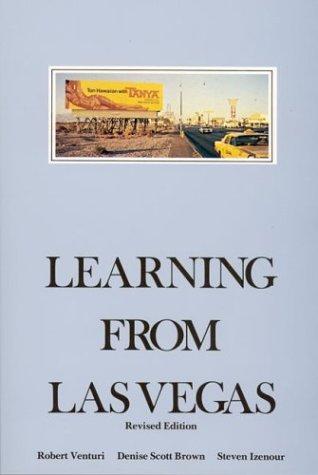
Learning from Las Vegas: The Forgotten Symbolism of Architectural Form
Uses the Dunes' 180-foot Arabian-arch neon oasis pylon as a primary architectural case study of Strip roadside symbolism.
View Hardcover on Amazon ↗
The Green Felt Jungle
Chronicles Major Riddle's ownership syndicate, Teamsters financing, and mid-century casino politics inside the 1950s–1960s Dunes.
View Hardcover on Amazon ↗
Super Casino: Inside the 'New' Las Vegas
Covers Steve Wynn's $75 million Dunes buyout, the October 1993 pirate-battle implosion, and the rise of Bellagio on its footprint.
View Hardcover on Amazon ↗
1989–2024 • Megaresort Era
5 Photos

1944–1986 • Casino Showrooms
5 Photos

Liberace Las Vegas Showrooms: 1944–1986 Golden Age History
Read Article →
1993–2024 • Strip Megaresort Era
5 Photos
Las Vegas Casino Implosions Timeline: Every Blast (1993–2024)
Read Article →
1958–2007 • Strip Icons
5 Photos

Stardust Hotel & Casino Las Vegas History (1958–2007)
Read Article →
