Desert Inn Las Vegas History: Wilbur Clark & Howard Hughes
Read Article →
Las Vegas Atomic Testing History: 1950s Mushroom Clouds, Dawn Bomb Parties & Miss Atomic Bomb
Authorized by President Harry S. Truman on December 18, 1950 across 680 square miles of Frenchman Flat and Yucca Flat just 65 miles northwest of Downtown Las Vegas, the Nevada Proving Grounds (renamed the Nevada Test Site in 1955) detonated 100 atmospheric nuclear bombs between January 27, 1951 and July 17, 1962, followed by 828 underground blasts before testing halted in September 1992. Driven underground by the 1963 Limited Test Ban Treaty, the twelve-year open-air era made Las Vegas the only resort city on earth where tourists sipped cocktails while watching real thermonuclear-era mushroom clouds climb above the horizon.
Rather than panicking that Cold War weapons testing would scare away California vacationers, the Las Vegas Chamber of Commerce and Las Vegas News Bureau publicists rebranded southern Nevada as “Atomic City, USA.” Casino lounges mixed predawn Atomic Cocktails, newspapers printed Atomic Energy Commission blast timetables alongside showroom listings, and Strip publicists crowned four atomic beauty queens, producing the single most recognizable Cold War publicity portrait of the 1950s.

Atomic blast, Nevada Test Site, November 1951 “From 55 miles away another of last week’s atomic explosions looks like a gigantic, blindingly brilliant candle standing on distant Frenchman Flat. The photograph was made from an 8,000-foot mountain range a few seconds after the bomb was detonated.
In This Article • 5 Archival Photographs
Click any photo to view full size
Archival Landmark Dossier
Test Site Authorized
December 18, 1950 by President Harry S. Truman (65 miles NW of Las Vegas)
First Detonation
January 27, 1951: Operation Ranger, Shot Able (1 kiloton at Frenchman Flat)
Total Nuclear Tests
928 detonations (100 atmospheric 1951–1962; 828 underground through 1992)
Signature Strip Venues
Desert Inn Sky Room & Sands Dawn Bomb Parties (“Atomic Cocktail”)
Iconic 1957 Photograph
Lee A. Merlin as “Miss Atomic Bomb” by Don English (May 24, 1957)
Atmospheric Ban & Museum
Limited Test Ban Treaty (Oct. 10, 1963); National Atomic Testing Museum (755 E Flamingo Rd)
Why Did President Truman Put the Nevada Test Site 65 Miles from Las Vegas in December 1950?
Between 1946 and 1948, the United States tested nuclear weapons thousands of miles away at Bikini and Enewetak Atolls in the Marshall Islands. After the Soviet Union detonated its first atomic bomb in August 1949 and the Korean War erupted in June 1950, Pentagon planners warned that shipping scientists, instrumentation, and troops across the Pacific cost too much money and time, and risked maritime security breaches. Searching for federally owned, sparsely populated desert basin land with predictable dry weather near existing laboratories at Los Alamos, the Atomic Energy Commission (AEC) selected the southeastern corner of the Las Vegas Bombing and Gunnery Range.
President Harry S. Truman signed the order establishing the Nevada Proving Grounds on December 18, 1950. Less than six weeks later, at 5:45 a.m. on January 27, 1951, an Air Force Boeing B-50 bomber released Shot Able of Operation Ranger, a 1-kiloton plutonium-uranium core, over Frenchman Flat. A silent white flash turned predawn Fremont Street brighter than noon, followed minutes later by a sharp acoustic shockwave that shattered store windows Downtown and jolted gamblers at the Flamingo.
Four stiffer Ranger blasts followed within ten days, rattling crockery and triggering an early wave of broken-glass claims. Instead of protesting Washington’s presence, local business leaders noted that thousands of high-paid AEC physicists, military officers, and construction contractors were suddenly filling Las Vegas hotels during the slow winter season.

Residents in Las Vegas watching a mushroom cloud rise after an atomic detonation at Nevada Test Site, April 22, 1952. The people are on top of Don & Bob’s Motor Service, 908 Las Vegas Blvd S, facing northwest at South 4th & Hoover Ave.
How Did the Desert Inn Sky Room and Sands Dawn Bomb Parties Market “Atomic City, USA”?
Led by Chamber of Commerce publicists and Las Vegas News Bureau manager Sean Flannery, civic boosters leaned aggressively into nuclear spectacle. The Chamber adopted an official emblem depicting a smiling mushroom cloud, Downtown’s Horseshoe Club handed out complimentary color postcards of blasts photographed from Mount Charleston, and local newspapers printed the AEC’s unclassified predawn detonation schedules so visitors knew exactly when to look northwest toward Mount Charleston and Gass Peak.
High-rollers flocked to the panoramic glass-walled Sky Room atop Wilbur Clark’s Desert Inn, then the highest vantage point on Highway 91, while rival publicist Al Freeman Jr. organized poolside Dawn Bomb Parties at the Sands Hotel. Guests stayed up gambling past 4:00 a.m., donned sunglasses, ordered picnic baskets, and toasted the flash with the Atomic Cocktail: equal parts vodka, brandy, and dry sherry shaken over ice and topped with chilled Brut champagne. Strip beauty parlors sculpted towering pink-rinsed “Atomic Hairdos,” and showroom comics joked that dice players no longer needed electricity to read the craps felt.

Residents in Las Vegas watching a mushroom cloud rise after an atomic detonation at Nevada Test Site, April 22, 1952. The people are on top of Don & Bob’s Motor Service, 908 Las Vegas Blvd S, facing northwest at South 4th & Hoover Ave.
Who Was “Miss Atomic Bomb” in Don English’s Famous May 1957 Sands Photograph?
Between 1952 and 1957, Las Vegas publicists and military correspondents crowned four separate atomic beauty queens, beginning with Last Frontier dancer Candyce King (“Miss Atomic Blast” at a May 1952 El Rancho Vegas picnic), North Las Vegas queen Paula Harris (“Miss A-Bomb,” spring 1953), and Sands Copa Girl Linda Lawson (“Miss Cue,” May 1955), before culminating during Operation Plumbbob, a marathon 29-shot series conducted between May and October 1957.
On May 24, 1957, Las Vegas News Bureau photographer Don English drove Sands Copa Girl Lee A. Merlin (born Anna Lee Mahoney) into the desert scrub with a bag of white cotton batting pinned in the unmistakable silhouette of a rising mushroom cloud across the front of her strapless swimsuit. Shooting upward from ground level against the cloudless Mojave sky as Merlin flung her arms wide in a jubilant ballet pose, English captured Miss Atomic Bomb, distributed over Associated Press and United Press wire circuits to hundreds of newspapers worldwide and enduring today as the defining visual artifact of Cold War pop optimism.

She ran a rooming house in the 30s. Together with her husband Jack Barrett, her daughter Stella, and Stella’s husband Joe Sobchik, they opened Virginia’s Cafe here in 1945.
What Happened at 1955’s “Survival City” (Operation Cue) and to Downwinders in St. George, Utah?
Public fascination peaked on May 5, 1955 during Operation Teapot’s Shot Apple-2, widely billed as Operation Cue after high winds delayed detonation for over a week (prompting reporters on the Strip to dub the wait “Operation Mis-Cue”). On Yucca Flat, Federal Civil Defense Administration engineers built “Survival City” (nicknamed “Doom Town”), a mock American suburb complete with two-story brick and wood-frame houses, high-voltage utility poles, automobiles, stocked canned-goods pantries, and J.C. Penney department-store mannequins dressed in business suits and children’s pajamas seated around breakfast tables.
Broadcast live across NBC and CBS to roughly 100 million Americans at 5:10 a.m., the 29-kiloton tower blast splintered timber homes 4,700 feet from Ground Zero in seconds, scorching mannequins so Civil Defense officials could inspect blast-shelter survivability. Yet the AEC deliberately waited to fire tests until winds blew northeast away from Las Vegas and Los Angeles, sending lethal radioactive plumes directly across rural ranching towns in Lincoln County, Nevada, and southern Utah.
On May 19, 1953, the 32-kiloton Shot Harry (“Dirty Harry” of Operation Upshot-Knothole) coated St. George, Utah, 135 miles east, in heavy fallout, forcing residents indoors while Geiger counters pegged off the scale and thousands of grazing sheep died that spring. Decades of elevated leukemia, thyroid, and bone-cancer rates among these “downwinders” eventually led Congress to enact the Radiation Exposure Compensation Act (RECA) in October 1990, paying statutory restitution to exposed residents and on-site test participants.
| Date | Operation & Shot | Yield & Delivery | Impact on Las Vegas & the Southwest |
|---|---|---|---|
| Dec. 18, 1950 | Nevada Proving Grounds Authorized | 680 sq. mi. reserve | President Truman approves continental nuclear test range 65 miles northwest of Downtown Las Vegas. |
| Jan. 27, 1951 | Operation Ranger, Shot Able | 1 kiloton (B-50 airdrop) | First Nevada nuclear detonation flashes across Fremont Street at 5:45 a.m. and cracks Downtown glass. |
| May 19, 1953 | Upshot-Knothole, Shot Harry | 32 kilotons (300-ft tower) | “Dirty Harry” blankets St. George, Utah in heavy fallout, fueling future downwinder RECA claims. |
| May 5, 1955 | Operation Teapot, Apple-2 (“Cue”) | 29 kilotons (500-ft tower) | Live TV broadcasts obliteration of “Survival City” mannequin houses on Yucca Flat to 100M viewers. |
| May 24, 1957 | Operation Plumbbob Publicity | 29-shot 1957 series | Don English photographs Sands Copa Girl Lee A. Merlin in cotton mushroom swimsuit as “Miss Atomic Bomb.” |
| July 17, 1962 | Operation Sunbeam, Little Feller I | Low-yield surface shot | 100th and final atmospheric detonation in Nevada prior to the Oct. 10, 1963 Limited Test Ban Treaty. |
| April 26 & Dec. 19, 1968 | Shots Boxcar & Benham | 1.3 MT & 1.15 MT (Underground) | Megaton shafts sway Strip towers; Howard Hughes lobbies Presidents Johnson and Nixon to stop blasts. |

She ran a rooming house in the 30s. Together with her husband Jack Barrett, her daughter Stella, and Stella’s husband Joe Sobchik, they opened Virginia’s Cafe here in 1945.
Why Did Howard Hughes Fight Underground Megaton Blasts in 1968, and Where Is the Atomic Museum?
When the Limited Test Ban Treaty took effect on October 10, 1963, outlawing nuclear detonations in the atmosphere, outer space, and underwater, mushroom clouds vanished from the Las Vegas skyline. Testing itself accelerated beneath Pahute Mesa and Yucca Flat, where engineers drilled vertical shafts thousands of feet deep for 828 underground detonations through September 23, 1992.
By 1968, underground thermonuclear calibration tests topped one megaton, nearly seventy times the yield of Hiroshima, sending rolling magnitude-6.0 seismic waves directly beneath the Strip’s new high-rise hotel towers. Terrified of groundwater contamination and structural collapse from his ninth-floor sanctuary atop the Desert Inn, billionaire Howard Hughes launched an extraordinary crusade against the AEC. Before the 1.3-megaton Boxcar shot on April 26, 1968 and the 1.15-megaton Benham shot on December 19, 1968(both of which set chandeliers swinging across Caesars Palace, the Sands, and the Landmark for nearly sixty seconds) Hughes wired urgent personal appeals to President Lyndon B. Johnson, dispatched aides to lobby President-elect Richard Nixon, funded independent geophysical studies, and threatened to bankroll nationwide anti-nuclear advertisements until Washington shifted multi-megaton tests to Amchitka Island in Alaska.
Following the United States’ voluntary moratorium on full-scale nuclear explosive testing after Shot Divider on September 23, 1992, historians preserved this forty-year Cold War record inside the Smithsonian-affiliated National Atomic Testing Museum, opened in March 2005 at 755 East Flamingo Road just blocks east of the Strip.
Frequently Asked Questions
Could you really see atomic mushroom clouds from the Las Vegas Strip?
Yes. Between January 27, 1951 and July 17, 1962, the Atomic Energy Commission detonated 100 above-ground nuclear tests at Frenchman Flat and Yucca Flat, roughly 65 miles northwest of Las Vegas. Predawn flashes lit the entire valley sky, and high-altitude tower or balloon mushroom clouds rose 30,000 to 40,000 feet above the Spring Mountains, clearly visible from Downtown rooftops and Strip resorts.
What was in the 1950s Las Vegas Atomic Cocktail?
Served at predawn blast-viewing gatherings in the Desert Inn’s rooftop Sky Room and at poolside Dawn Bomb Parties at the Sands Hotel during the early 1950s, the classic Las Vegas Atomic Cocktail combined equal parts vodka, brandy, and dry sherry (typically half an ounce to one ounce each, sometimes with a dash of orange liqueur), shaken cold and topped with Brut champagne.
How many nuclear bombs were detonated at the Nevada Test Site?
According to declassified U.S. Department of Energy historical ledgers, exactly 928 nuclear test operations (involving 1,021 individual nuclear explosive devices, since several vertical shafts detonated multiple simultaneous charges) were conducted at the Nevada Test Site between January 27, 1951 and September 23, 1992, comprising 100 open-air atmospheric tests through July 1962 and 828 underground tests.
Who was the showgirl in the famous 1957 Miss Atomic Bomb photo?
The woman in Don English’s May 24, 1957 Las Vegas News Bureau photograph was Sands Hotel Copa Girl Lee A. Merlin (born Anna Lee Mahoney, 1925–2011). Posing in the desert during Operation Plumbbob with white cotton batting shaped like a rising mushroom cloud pinned to her swimsuit, Merlin became the fourth and most famous Las Vegas atomic beauty queen.
Curated Historical Bibliography
Recommended Las Vegas History Books
Recommended historical books and architectural studies covering this landmark. As an Amazon Associate, LasVegasArchive.com earns from qualifying purchases.
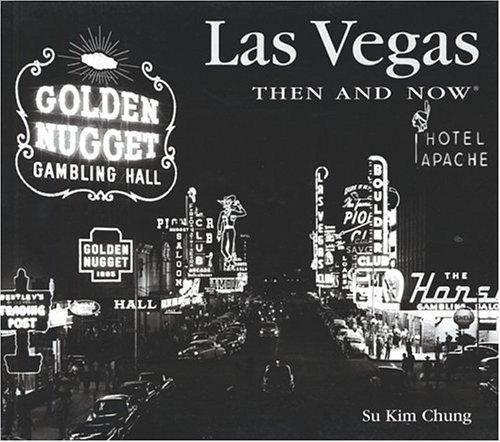
Las Vegas Then and Now
Features UNLV Special Collections photography documenting how 1950s Las Vegas blended Cold War civil defense with Strip entertainment.
View Hardcover on Amazon ↗
The Green Felt Jungle
Chronicles the exact 1950s and early-1960s Desert Inn, Sands, and Horseshoe casino bosses who hosted AEC officials and Dawn Bomb Parties.
View Hardcover on Amazon ↗
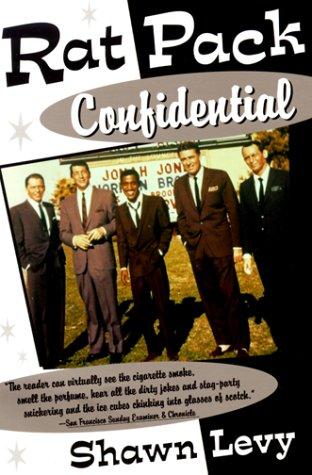
Rat Pack Confidential: Frank, Dean, Sammy, Peter, Joey and the Last Great Showbiz Party
Captures the late-night Copa Room and Sands poolside culture where showgirls, journalists, and gamblers stayed awake until predawn test shots.
View Hardcover on Amazon ↗
Suburban Xanadu: The Casino Resort on the Las Vegas Strip and Beyond
Explains how federal defense payrolls at Nellis Air Force Base and the Nevada Test Site stabilized Las Vegas’s postwar resort economy.
View Hardcover on Amazon ↗
1950–2001 • Classic Strip & Hughes Era
5 Photos

1952–1996 • Strip Icons
5 Photos

Sands Hotel & Casino Las Vegas History: Copa Room & Rat Pack
Read Article →
1958–2007 • Strip Icons
5 Photos

Stardust Hotel & Casino Las Vegas History (1958–2007)
Read Article →
1955–1993 • Strip Icons
5 Photos

Dunes Hotel & Casino Las Vegas History (1955–1993)
Read Article →
