Golden Nugget Las Vegas History: 1946 Opening to Steve Wynn
Read Article →
Vegas Vic, Pioneer Club & Fremont Street History: How Glitter Gulch Lit Downtown Las Vegas
Opened in 1942 inside the historic 1908 Opera House and Beckley Building at 25 East Fremont Street by casino partners Tutor Scherer, Chuck Addison, and Farmer Page, the Pioneer Club anchored Downtown Las Vegas’s “Glitter Gulch” for fifty-three years before closing its gaming floor in May 1995. In summer 1951, Young Electric Sign Company (YESCO) designer Hermon Boernge mounted the 40-foot, 6-ton animated neon cowboy Vegas Vic onto the club’s corner facade, where the landmark still stands preserved beneath the Fremont Street Experience canopy today.
Before high-rise towers lined Highway 91, Las Vegas’s visual identity radiated from the four blocks of Fremont Street stretching east from the Union Pacific railroad depot at Main Street. Between the town’s May 15, 1905 land auction and the mid-1950s neon arms race, dusty brick storefronts gave way to a canyon of kinetic cathode tubes so bright at midnight that airliners spotted Downtown’s glow from a hundred miles across the Mojave.

Vegas Vic towering above the Pioneer Club at 25 East Fremont Street, where the 1908 Las Vegas Opera House and 1912 Beckley Building evolved into Glitter Gulch’s signature neon corner.
In This Article • 5 Archival Photographs
Click any photo to view full size
Archival Landmark Dossier
Location
25 East Fremont Street (SW corner of First & Fremont Streets)
Building Origins
Las Vegas Opera House (Feb. 12, 1908); Beckley Building (1912)
Pioneer Club Opened
1942 by Tutor Scherer, Chuck Addison & Farmer Page
Vegas Vic Installed
Summer 1951 by YESCO (Hermon Boernge after Pat Denner’s 1947 art)
Sign Specifications
40 feet tall, 6 tons, 7.5-foot waving arm & 15-minute “Howdy, podner!” audio
Casino Closure
May 1995 (sign preserved beneath Dec. 1995 Fremont Street Experience)
How Did Fremont Street Evolve from the 1905 Railroad Auction into “Glitter Gulch”?
Modern Downtown Las Vegas began under a sweltering canvas tent near Main and Fremont Streets on May 15, 1905, when San Pedro, Los Angeles & Salt Lake Railroad executive Charles Whittemore auctioned 1,200 townsite lots over two days. Within eighteen months, two-story masonry buildings replaced canvas saloons at the western head of Fremont Street, led by John F. Miller’s 1906 Hotel Nevada at 1 East Fremont (today the Golden Gate) and the autumn 1906 Thomas Building at 32 Fremont Street housing Wilson Drug Company.
Paved in 1925 to carry automobile traffic toward the Hoover Dam survey camps, Fremont Street acquired its first gas-filled neon sign that same year outside the Oasis Cafe. After Nevada Governor Fred Balzar signed Assembly Bill 98 re-legalizing wide-open casino gaming on March 19, 1931, matriarch Mayme Stocker claimed Downtown’s first state license at the Northern Club (15 East Fremont), quickly joined by the Boulder Club (118 East Fremont), the elevator-equipped 1932 Apache Hotel, the Las Vegas Club (21–23 East Fremont), and the Nevada Club.
Thomas Young’s Ogden-based Young Electric Sign Company (YESCO) opened a permanent Las Vegas shop in the early 1930s and leased monumental custom displays to casino operators on monthly maintenance contracts. As rival halls competed to pull pedestrians across narrow sidewalks, culminating in Guy McAfee’s Golden Nugget at Second Street in August 1946, reporters christened the incandescent corridor “Glitter Gulch.”

Opera House / Beckley building / Pioneer Club Vegas Vic sign and 25 Fremont St, Las Vegas. Opera House (‘08-'12) Beckley Building ('12-) ’ 08: Feb.
What Stood at 25 East Fremont Street Before the Pioneer Club Opened in 1942?
The corner parcel at 25 East Fremont Street (southwest corner of First and Fremont) anchored civic life three decades before a roulette wheel spun inside. On February 12, 1908, the two-story Las Vegas Opera House opened on the lot, staging traveling vaudeville troupes, silent motion pictures, prizefights, school graduations, and town dances in its second-floor auditorium above ground-floor shops.
In 1912, haberdasher and real-estate investor Will Beckley purchased the structure, renaming it the Beckley Building; First State Bank of Las Vegas and later the Thomas Department Store occupied the street level through the Great Depression. In 1942, veteran Downtown gambling partners Tutor Scherer, Chuck Addison, and Farmer Page, allied with former Los Angeles vice officer Guy McAfee and builder Marion Hicks, leased the Beckley Building and gutted its retail floor to open the Pioneer Club.
Before 1951, the Pioneer Club’s First-and-Fremont marquee showcased a covered wagon drawn by oxen in glowing neon tubes above open-front folding doors, allowing sidewalk strollers to hear silver dollars clattering into slot trays without stepping through a vestibule.

Opera House / Beckley building / Pioneer Club Vegas Vic sign and 25 Fremont St, Las Vegas. 12, The Opera House, the first building at 25 Fremont opens.
Who Designed Vegas Vic and How Did YESCO Build the 40-Foot Neon Cowboy in 1951?
Vegas Vic began not as a casino sign, but as a Chamber of Commerce tourism mascot. In 1947, the Las Vegas Chamber of Commerce retained the West-Marquis advertising agency to soften the town’s gritty gambling reputation into hospitable Western fun. Salt Lake City commercial illustrator Pat Denner sketched a tall, friendly ranch hand in a yellow-and-red plaid shirt, blue jeans, bandana, and ten-gallon Stetson, hooking one thumb with the greeting “Howdy Podner.” Printed on millions of decals, matchbooks, and highway billboards, Denner’s cowboy became synonymous with postwar Las Vegas.
Recognizing an unmistakable street-corner magnet, the Pioneer Club hired YESCO art director Hermon Boernge to scale Denner’s flat illustration into a monumental kinetic sculpture wrapping the building’s corner. Hoisted into place during the summer of 1951, Vegas Vic stood 40 feet tall (nearly 45 feet to his hat tip above the awning), weighed 6 tons, and radiated light from hundreds of feet of hand-bent neon glass backed by painted sheet metal.
YESCO engineers packed four synchronized animations into Vic’s steel frame: a motorized cam swung his 7.5-foot articulated right arm in a welcoming wave, an electrical relay winked his eye, a mechanical linkage shifted the cigarette at his lips with a puff of simulated smoke, and a hidden loudspeaker boomed a recorded fifteen-second baritone “Howdy, podner!” across Fremont Street every 15 minutes.
| Year | 25 E Fremont & Glitter Gulch Milestone | Key Figures / Designers | Architectural & Cultural Significance |
|---|---|---|---|
| May 15, 1905 | Las Vegas Railroad Land Auction | Charles Whittemore (SPLA&SL RR) | 1,200 lots auctioned near Main & Fremont, establishing Fremont Street as Downtown’s commercial axis. |
| Feb. 12, 1908 | Las Vegas Opera House Opens | Will Beckley (1912 owner) | Two-story brick hall opens at 25 E Fremont; renamed Beckley Building in 1912 for banking and dry goods. |
| 1925 & 1931 | First Neon & Legalized Gambling | Oasis Cafe; Mayme Stocker | Oasis Cafe lights city’s first neon (1925); AB 98 (1931) sparks Northern Club, Boulder Club & Las Vegas Club. |
| 1942 | Pioneer Club Opens | Tutor Scherer, Chuck Addison, Farmer Page | Converts Beckley Building ground floor into an open-front Western casino with covered-wagon neon facade. |
| 1947 & 1951 | “Howdy Podner” & Vegas Vic | Pat Denner (1947); Hermon Boernge (1951) | YESCO installs 40-foot, 6-ton waving, winking, talking neon cowboy on the Pioneer Club’s corner. |
| 1966 | Vegas Vic’s Voice Silenced | Lee Marvin (staying at The Mint) | Filming The Professionals, Marvin complains about sleepless 15-minute broadcasts; audio switched off. |
| 1980 | Marriage to Vegas Vicky | Jack Larsen Sr. (YESCO) | 25-foot kicking cowgirl installed across Fremont atop Glitter Gulch casino with mock civic wedding. |
| May & Dec. 1995 | Pioneer Closes; Canopy Opens | Jon Jerde (Fremont St Experience) | Pioneer Club casino closes May 1995; Vic’s hat brim trimmed slightly to fit under Dec. 14, 1995 canopy. |

Thomas building, 32 Fremont St, Las Vegas, 1906 The building was on the northwest corner of Fremont & 1st. Thomas building, completed by Fall. (Archival photograph from the Fremont Street (Glitter Gulch) 1906 collection, hosted via The Las Vegas Archive Tumblr CDN).
Why Did Actor Lee Marvin Silence Vegas Vic in 1966, and Who Is Vegas Vicky?
For fifteen years, Vegas Vic’s quarter-hour “Howdy, podner!” echoed unchallenged down Fremont Street, until Hollywood tough guy Lee Marvin checked into the newly built 26-story tower of The Mint Hotel next door at 100 East Fremont Street in 1966 while shooting Richard Brooks’s desert action classic The Professionals alongside Burt Lancaster in the Valley of Fire. Exhausted after dusty location shoots, Marvin was jolted awake every fifteen minutes by Vic’s amplified greeting bouncing straight against The Mint’s guest-room windows.
After furious complaints to hotel management, accompanied by Marvin’s colorful threat to take a rifle to the neon cowboy’s speaker himself, Pioneer Club executives pulled the plug on Vegas Vic’s audio loop. Although technicians briefly tested reviving the voice box in the 1980s, Vic has remained silent for nearly his entire modern life.
In 1980, Vic gained a companion directly across the street at 20 East Fremont when YESCO designer Jack Larsen Sr. built a 25-foot-tall blonde neon cowgirl with a kicking fringed boot, known variously as Sassy Sally and Vegas Vicky, above the Glitter Gulch casino. Civic promoters staged a full sidewalk wedding ceremony uniting the two signs across the asphalt. When Glitter Gulch was demolished for Derek Stevens’s Circa Resort & Casino, YESCO fully restored Vegas Vicky and re-hung her inside Circa’s lobby lounge in October 2020.

15-25 Fremont St, c. 1931 Unknown parade passing Beckley Building (25 Fremont), Las Vegas Club/Hotel (21-23), Las Vegas Cafe, Northern Club.
What Happened to the Pioneer Club in May 1995 When the Fremont Street Experience Was Built?
Owned from the mid-1960s into the 1980s by the Elardi family before later small-stakes operators took over, the narrow, hotel-less Pioneer Club struggled as megaresorts on the Strip drained Downtown’s foot traffic in the early 1990s. When ten Downtown casinos pooled private capital with municipal redevelopment funds to pedestrianize five blocks of Fremont Street and erect architect Jon Jerde’s $70 million Fremont Street Experience space-frame light canopy, the Pioneer Club permanently closed its casino in May 1995.
As ironworkers bolted the 90-foot-high barrel-vault canopy directly over First and Fremont Streets ahead of its December 14, 1995 debut, engineers discovered that the uppermost point of Vegas Vic’s ten-gallon Stetson interfered with the canopy’s structural ribs. Rather than relocating the 1951 landmark, crews shaved roughly two feet off the top edge of Vic’s hat brim so he could remain bolted to 25 East Fremont Street. Restored in 1998 through a partnership between building owners, YESCO, and the Neon Museum, Vegas Vic still glows above a ground-floor gift shop inside the surviving 1908 Opera House walls, the enduring neon sentinel of Downtown Las Vegas.
Frequently Asked Questions
Is Vegas Vic still on Fremont Street in Las Vegas?
Yes. Vegas Vic still hangs in his original summer 1951 location on the exterior corner of the former Pioneer Club building at 25 East Fremont Street (First and Fremont Streets) beneath the Fremont Street Experience canopy. Although the Pioneer Club casino closed in May 1995 and the ground floor now operates as a souvenir store, Vic’s neon tubes remain lit nightly.
How tall and heavy is the Vegas Vic neon sign?
Built by Young Electric Sign Company (YESCO) from Hermon Boernge’s 1951 engineering drawings, Vegas Vic stands approximately 40 feet tall (originally closer to 45 feet before roughly two feet of his hat brim were trimmed in 1995 to clear the Fremont Street Experience canopy), weighs 6 tons, and swings a 7.5-foot motorized right arm.
Why did Vegas Vic stop saying “Howdy, podner!”?
From summer 1951 until 1966, an external loudspeaker inside Vegas Vic broadcast a recorded baritone “Howdy, podner!” greeting across First and Fremont Streets every 15 minutes. In 1966, Academy Award-winning actor Lee Marvin, staying next door at The Mint Hotel at 100 East Fremont Street while filming The Professionals, complained that the booming audio ruined his sleep, prompting casino managers to silence the recording.
What happened to Vegas Vicky, the neon cowgirl across from Vegas Vic?
Designed by YESCO’s Jack Larsen Sr. and installed in 1980 across the street at 20 East Fremont Street, the 25-foot kicking cowgirl Vegas Vicky was removed in 2017 when the Glitter Gulch building was razed. Fully restored by YESCO artisans, she reopened indoors in October 2020 as the centerpiece of Vegas Vickie’s Cocktail Lounge inside Circa Resort & Casino.
Curated Historical Bibliography
Recommended Las Vegas History Books
Recommended historical books and architectural studies covering this landmark. As an Amazon Associate, LasVegasArchive.com earns from qualifying purchases.
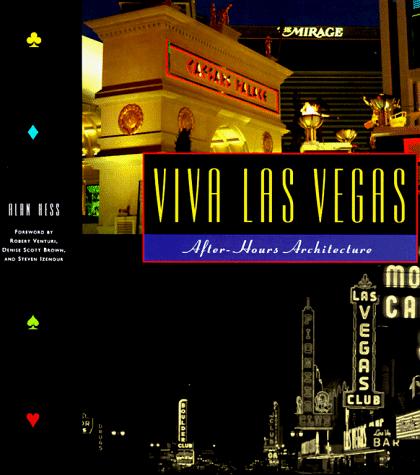
Viva Las Vegas: After-Hours Architecture
Details how YESCO designers Hermon Boernge, Kermit Wayne, and Jack Larsen transformed Fremont Street storefronts into kinetic neon architecture.
View Hardcover on Amazon ↗
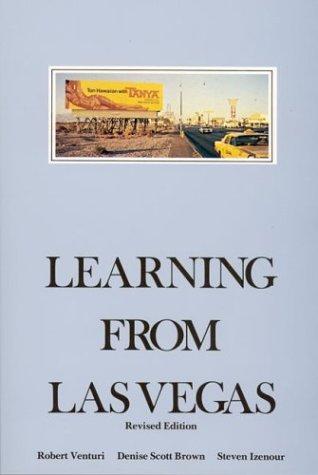
Learning from Las Vegas: The Forgotten Symbolism of Architectural Form
Contrasts Fremont Street’s pedestrian-scale wall-to-wall neon facade along Glitter Gulch with the automobile-scaled pylons of Highway 91.
View Hardcover on Amazon ↗
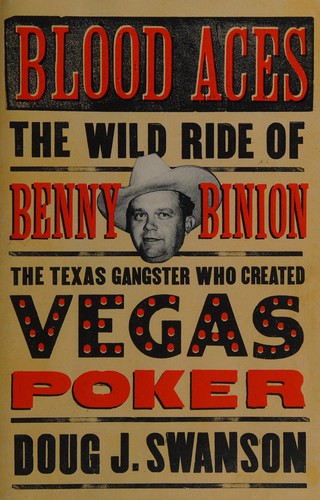
Blood Aces: The Wild Ride of Benny Binion, the Texas Gangster Who Created Vegas Poker
Captures the gritty 1940s and 1950s Downtown gambling culture surrounding Tutor Scherer’s Pioneer Club, the Apache Hotel, and Benny Binion’s Horseshoe.
View Hardcover on Amazon ↗
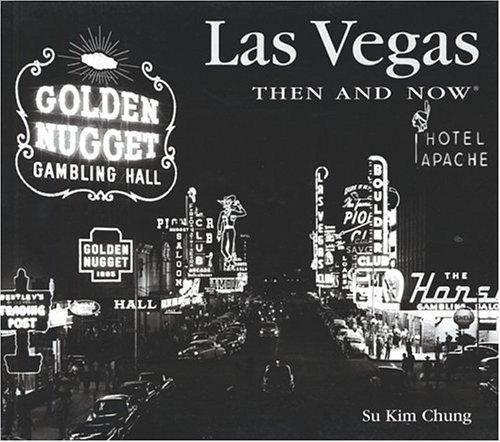
Las Vegas Then and Now
Matches early UNLV archival views of the 1906 Thomas Building and 1908 Beckley Opera House against modern Fremont Street.
View Hardcover on Amazon ↗
1946–Present • Downtown Glitter Gulch
5 Photos

1951–Present • Downtown Glitter Gulch
5 Photos

Binion's Horseshoe Las Vegas: Benny Binion, $1M Cash & WSOP
Read Article →
1957–1974 • Fremont Street & The Strip
5 Photos

Circus Circus & The Mint History: Fear and Loathing's Vegas
Read Article →
1958–2007 • Strip Icons
5 Photos

Stardust Hotel & Casino Las Vegas History (1958–2007)
Read Article →
