Caesars Palace (1966) & Jay Sarno: Las Vegas Strip History
Read Article →
Circus Circus & The Mint History: Reconstructing Hunter S. Thompson's 1971 Las Vegas
Two mid-century Nevada casinos anchor the real geography behind Hunter S. Thompson's 1971 Rolling Stone dispatches: The Mint Hotel & Casino, opened on July 12, 1957 at 100 E. Fremont Street by Sahara developer Milton Prell (later absorbed into Binion's Horseshoe in 1988), and Circus Circus, opened on October 18, 1968 at 2880 Las Vegas Boulevard South by Caesars Palace creator Jay Sarno and still operating on the North Strip today. When Sports Illustrated wired Thompson $250 in March 1971 to write terse photo captions for the fourth annual Mint 400 off-road desert race, he checked into Room 1850 of The Mint's 26-story concrete tower and turned two chaotic reporting trips into Fear and Loathing in Las Vegas.
Stripping away Thompson's literary aliases and hallucinatory exaggeration reveals two daring architectural experiments caught at a fragile historical crossroads. In the spring of 1971, Downtown's tallest skyscraper promoted behind-the-scenes surveillance tours and dusty desert rallies to compete with the Strip, while Sarno's roomless pink-and-white concrete big top was bleeding cash under an admission turnstile and live baby elephants, three years before corporate pragmatists William Bennett and William Pennington reinvented it as America's budget family casino.

Mac Miller's c. 1968 photograph of the revolving Horse-a-Round Bar inside Circus Circus, immortalized three years later by Hunter S. Thompson as the 'Merry-Go-Round Bar' inside 'Bazooka Circus.'
In This Article • 5 Archival Photographs
Click any photo to view full size
Archival Landmark Dossier
The Mint Opened / Closed
July 12, 1957 – 1988 (100 E. Fremont St.; absorbed by Binion's)
Mint Architects
Walter Zick & Harris Sharp (1957); Martin Stern Jr. (1965 26-story tower)
Circus Circus Opened
October 18, 1968 at 2880 Las Vegas Blvd. South ($15M build)
Circus Circus Creator
Jay Sarno & Stanley Mallin (architects Rissman & Stern)
Thompson's 1971 Visits
March 21–23, 1971 (Mint 400, Room 1850) & April 25–29, 1971 (Flamingo)
1974 Circus Turnaround
Leased by William Bennett & William Pennington (Circus Circus Enterprises)
How Did Milton Prell and Del Webb Build The Mint into Downtown's Tallest Skyscraper?
Fresh off his success at the Sahara Hotel on Highway 91, club operator Milton Prell teamed with local Modernist architects Walter Zick and Harris Sharp to squeeze a sleek, air-conditioned slot and table palace onto the northeast corner of First and Fremont Streets (100 E. Fremont St.). Opening on July 12, 1957, The Mint stood out immediately amidst Fremont Street's Western facades thanks to a soaring, blade-like pink neon vertical fin and an angled zig-zag portico studded with thousands of flashing bulbs that cast a rose-colored glow down Glitter Gulch.
Phoenix construction magnate Del E. Webb purchased a controlling interest in The Mint alongside the Sahara in 1961 and hired architect Martin Stern Jr. to build straight up on the constrained urban lot. Topped out in March 1965, Stern's 300-room, 26-story shear-wall concrete tower eclipsed every building in Downtown Las Vegas. An exterior glass-enclosed Otis "Skyscraper" elevator whisked tourists up the west facade to the circular Top o' the Mint cocktail lounge and dining room, offering unobstructed panoramas across the construction site of the Four Queens (opened June 1966) to the Spring Mountains.
On the casino mezzanine, management turned security theater into a free tourist attraction. Patrons could walk a guided "Behind the Scenes" catwalk tour directly above the pit, peering down through one-way surveillance mirrors, the "Eye in the Sky", while recorded narration explained how spotters detected card mechanics and past-posters.

Horse-a-Round Bar, Circus Circus c. 1968 Postcard photo by Mac Miller.
How Did Norm Johnson's 1968 Mint 400 Bring Hunter S. Thompson to Room 1850?
To fill those 300 tower rooms during slow early-spring weekends, Mint public relations director Norm Johnson devised a cross-desert publicity stunt in 1967–1968. Inspired by the Mexican 1000 (Baja 1000), Johnson proposed staging an off-road rally linking The Mint on Fremont Street with Del Webb's sister resort, the Sahara-Tahoe at Stateline. When public highway rules barred a point-to-point race across Nevada state routes, Johnson laid out a brutal 100-mile closed loop of silt beds, dry washes, and volcanic rock north toward Las Vegas Motor Speedway's modern Sunrise Mountain desert basin. Drivers ran four grueling laps for a $30,000 purse in the inaugural 1968 Mint 400 Del Webb Desert Rally, while tech inspection parked screaming Baja Bugs, motorcycles, and dune buggies bumper-to-bumper directly under Fremont Street's neon.
By March 21–23, 1971, the fourth annual Mint 400 attracted over 300 entries (including Hollywood actor Steve McQueen, astronaut Gordon Cooper, and Parnelli Jones) prompting Sports Illustrated to assign journalist Hunter S. Thompson a modest $250 photo-caption gig. Accompanied by Chicano civil rights attorney Oscar Zeta Acosta (transformed into "Dr. Gonzo" alongside Thompson's "Raoul Duke" to protect Acosta's legal bar standing), Thompson drove a rented red 1971 Chevrolet Impala convertible from Los Angeles and checked into Room 1850 on the eighteenth floor of The Mint tower.
When blinding alkaline dust clouds rendered the desert race nearly invisible past the starting line at the Mint Gun Club, Sports Illustrated rejected Thompson's sprawling 2,500-word manuscript. Undeterred, Thompson and Acosta returned to Las Vegas a month later, April 25–29, 1971, checking into the Flamingo Hotel to cover the National District Attorneys Association's Third National Institute on Narcotics and Dangerous Drugs, fusing both trips with British artist Ralph Steadman's ink illustrations in Rolling Stone issues #95 and #96 (November 1971).

Life on Fremont St, 1957. Photos by Arthur Grant, Las Vegas local and partner in Nevada Club.
What Was Jay Sarno's Roomless 1968 Circus Circus ('Bazooka Circus') Actually Like?
In Thompson's narrative, only one Strip casino is thin-masked under a fictional pseudonym because of its libelous depiction as the psychological vortex of American excess: "Bazooka Circus," Thompson's stand-in for Circus Circus. Opened on October 18, 1968 by Caesars Palace founder Jay Sarno and partner Stanley Mallin for $15 million (financed heavily through Jimmy Hoffa's Teamsters Central States Pension Fund), Circus Circus occupied a former Hunt-family parcel at 2880 Las Vegas Boulevard South.
Designed by architects Homer Rissman and Martin Stern Jr., the 129,000-square-foot pavilion used precast, fluted pink-and-white concrete ribs suspended from steel masts to mimic a permanent three-ring circus tent. Crucially, when Circus Circus opened in 1968, and when Thompson visited in spring 1971, it had zero hotel rooms. Even more unorthodox, Sarno installed entry turnstiles charging every adult a $1 admission cover just to step onto the casino floor, violating Las Vegas's cardinal rule of frictionless street access.
Inside, the sensory overload matched Thompson's prose almost verbatim. Unnetted Flying Palacios trapeze artists, high-wire cyclists, and acrobats swung directly above the main craps and blackjack pits while patrons craned their necks between rolls. Sarno's beloved baby Asian elephant, Tania, wandered the floor pulling giant slot handles and squirting water, chimpanzees rode miniature motorcycles, and nursemaids staffed supervised carnival midways on the upper gallery. On the main level stood the Horse-a-Round Bar, photographed on opening-era postcards by Mac Miller and Ralph Crane, a mechanized circular cocktail lounge mounted on a rotating carousel platform that completed several revolutions per hour while disoriented drinkers tried to locate the restrooms.

Life on Fremont St, 1957. The first photo is the Helldorado parade, May 17, 1957, passing the construction site of The Mint.
Which Las Vegas Landmarks in Fear and Loathing in Las Vegas Were Real vs. Disguised?
Comparing Thompson's 1971 hotel folios, LVCVA convention calendars, and archival street directories clarifies every landmark referenced across Parts One and Two of the book. Only Circus Circus and the Flamingo received fictionalized names in the legal vet by Random House attorneys, though Thompson left unmistakable architectural fingerprints on every page.
| Book Name in Thompson (1971) | Actual Las Vegas Property & Address | Archival Verification (Spring 1971) | Modern Fate of the Site |
|---|---|---|---|
| The Mint Hotel (Room 1850) | The Mint Hotel & Casino, 100 E. Fremont St. | 300-room 1965 Martin Stern Jr. tower; headquarters of Norm Johnson's March 21–23, 1971 Mint 400. | Merged into Binion's Horseshoe in 1988; 26-story tower still stands at Binion's. |
| "Bazooka Circus" & Merry-Go-Round Bar | Circus Circus, 2880 Las Vegas Blvd. South | Jay Sarno's 1968 tent casino; featured live aerialists over pits and the rotating Horse-a-Round Bar. | Still operating under Phil Ruffin; original 1968 concrete tent canopy remains intact. |
| "Fabulous Flamingo" (Part Two) | Flamingo Hotel, 3555 Las Vegas Blvd. South | Hosted the NDAA 3rd National Institute on Narcotics & Dangerous Drugs, April 25–29, 1971. | Operating as Flamingo Las Vegas; last 1950s motor-court wings demolished in 1993. |
| Desert Inn (Debbie Reynolds show) | Wilbur Clark's Desert Inn, 3145 Las Vegas Blvd. S. | Owned in 1971 by Howard Hughes's Summa Corp; Debbie Reynolds headlined the Crystal Room. | Imploded Oct 2001 & Nov 2004; replaced by Wynn Las Vegas and Encore. |
| Landmark Hotel coffee shop | Landmark Hotel, 364 Convention Center Dr. | 31-story space-needle tower opened by Hughes July 1, 1969 opposite LVCC. | Imploded Nov 7, 1995; now Las Vegas Convention Center West Hall expansion. |
| North Star Coffee Shop | North Vegas / Paradise diner composite | Reflects working-class US 93/95 cafes along Las Vegas Blvd. North toward Nellis AFB. | Demolished during commercial corridor redevelopment. |
Cross-checking those six stops against Ralph Steadman's original pen-and-ink sketches confirms how closely the two journalists worked from real rooms and casino pits: the 18th-floor Mint balcony looked directly onto the Union Pacific rail yards behind Main Street where Mint 400 mechanics tuned Baja engines through the night, while the Flamingo ballroom hosted over 1,000 county prosecutors and narcotics detectives during the exact last week of April 1971.

The $2M sale, called “the largest land transaction in recent years,” is the final Hunt holding in the area. The Molasky group sells to Sarno at a later date.
How Did William Bennett and William Pennington Turn Circus Circus into a Corporate Giant in 1974?
Sarno's high-roller instincts nearly bankrupted Circus Circus. Whale baccarat and craps gamblers hated dodging sticky cotton candy, screaming children, and flying trapeze chalk, while working-class families balked at the $1 door charge and had nowhere on site to sleep. Even after Sarno cobbled together a Teamsters loan to add a 409-room hotel wing in 1972 alongside federal tax-fraud indictments (on which Sarno was later acquitted), the property bled money.
In May 1974, former Del Webb executive William G. Bennett and northern Nevada slot-route operator William N. Pennington leased Circus Circus from Sarno and Mallin (buying the underlying property outright in 1983 after taking Circus Circus Enterprises public on the New York Stock Exchange). On day one, Bennett ripped out the $1 admission turnstiles, banished live elephants from the gaming pit, confined carnival games and free circus acts strictly to the elevated mezzanine so children never crossed the casino floor, and priced a sprawling all-you-can-eat prime rib buffet under $3 to pull middle-income families off Interstate 15.
By targeting fully paid cash-in-advance rooms rather than extending risky casino credit markers to mob-connected high rollers, Bennett and Pennington built the most consistently profitable balance sheet in Nevada gaming. They added the 15-story Manor motor lodges, the 29-story Skyrise Tower (1986), the 5-acre glass-enclosed Adventuredome theme park (August 1993), and the 35-story West Tower (1996), generating the corporate cash engine that built Excalibur (1990), Luxor (1993), and Mandalay Bay (1999) before MGM Mirage acquired Mandalay Resort Group in 2005 and sold Circus Circus to Treasure Island owner Phil Ruffin for $825 million in 2019. Downtown on Fremont Street, meanwhile, Del Webb sold The Mint in 1988 to Jack Binion, who knocked down the interior party wall to fold Milton Prell's neon palace and Room 1850 permanently into Binion's Horseshoe.
Frequently Asked Questions
Can you still stay in Room 1850 at The Mint in Downtown Las Vegas?
The physical 26-story concrete hotel tower designed by Martin Stern Jr. in 1965 still stands at the corner of First and Fremont Streets as the main tower of Binion's Gambling Hall (formerly Binion's Horseshoe, which absorbed The Mint in 1988). However, Binion's closed its 366-room vintage hotel tower to overnight guests in December 2009 during the Great Recession, leaving the upper floors, including Hunter S. Thompson's Room 1850, mothballed above the active ground-floor casino.
Does Circus Circus still have the revolving Horse-a-Round Bar from Fear and Loathing?
No. The mechanized rotating Horse-a-Round carousel bar photographed on main-floor postcards in 1968, and relocated to the mezzanine midway as the Carousel Bar in later decades, was permanently dismantled and replaced during interior food-and-beverage remodels in the early 2000s. However, Jay Sarno's original 1968 fluted pink-and-white precast concrete tent structure and free daily trapeze performances above the Midway stage still operate at 2880 Las Vegas Boulevard South.
Why did Jay Sarno charge a $1 admission fee when Circus Circus opened in 1968?
When Jay Sarno opened Circus Circus on October 18, 1968 without a hotel, he modeled the economics on a ticketed amusement pavilion, charging $1 at front turnstiles to offset the salaries of world-class European aerialists, animal trainers, and musicians. The fee backfired immediately because walk-in Strip tourists refused to pay a cover charge just to gamble, prompting William Bennett and William Pennington to abolish the turnstiles immediately upon taking over in May 1974.
When did the Mint 400 desert race start and does it still run in Las Vegas?
Mint Hotel public relations director Norm Johnson launched the inaugural Mint 400 off-road desert rally in 1968 with 101 vehicles competing for a $30,000 purse to cross-promote Del Webb's Mint casino Downtown and the Sahara-Tahoe. Annual Mint sponsorship ended after Binion's Horseshoe bought The Mint in 1988, pausing the race after 1989 until off-road promoters revived the Mint 400 in 2008 as a major annual March event in Primm and Fremont Street.
Curated Historical Bibliography
Recommended Las Vegas History Books
Recommended historical books and architectural studies covering this landmark. As an Amazon Associate, LasVegasArchive.com earns from qualifying purchases.
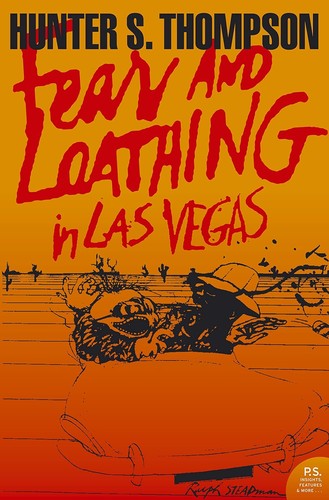
Fear and Loathing in Las Vegas
Hunter S. Thompson and Ralph Steadman's primary March–April 1971 dispatch from Room 1850 of The Mint and the Circus Circus Horse-a-Round Bar.
View Hardcover on Amazon ↗
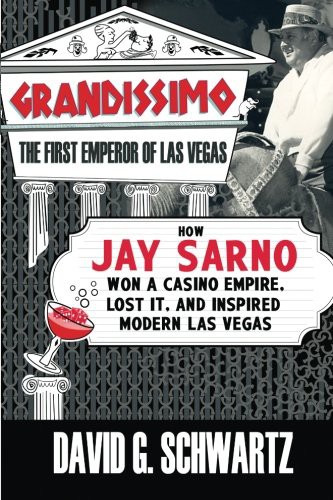
Grandissimo: The First Emperor of Las Vegas
David G. Schwartz's archival biography of Jay Sarno, detailing the Teamsters financing and operational chaos of the 1968 Circus Circus launch.
View Hardcover on Amazon ↗
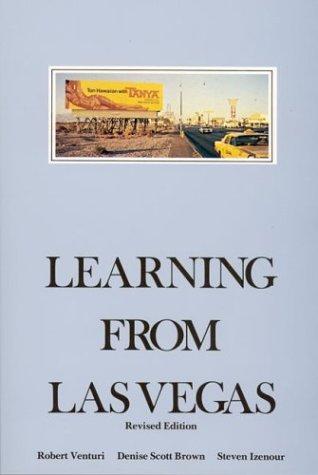
Learning from Las Vegas: The Forgotten Symbolism of Architectural Form
Venturi, Scott Brown, and Izenour's 1968–1972 Yale architectural studio study capturing the exact Strip signage and spatial form Thompson encountered.
View Hardcover on Amazon ↗
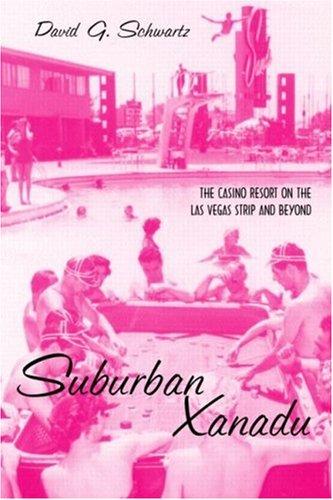
Suburban Xanadu: The Casino Resort on the Las Vegas Strip and Beyond
Explains how Bennett and Pennington's 1974 lease of Circus Circus pioneered Wall Street-financed family casinos.
View Hardcover on Amazon ↗
1966–Present • Strip Architecture
5 Photos

1951–Present • Downtown Glitter Gulch
5 Photos

Binion's Horseshoe Las Vegas: Benny Binion, $1M Cash & WSOP
Read Article →
1947–Present • North Strip Resorts
5 Photos

Sahara Hotel Las Vegas History: Club Bingo, Prima & 1964 Beatles
Read Article →
Downtown Glitter Gulch • 1905–1995
5 Photos

Vegas Vic Pioneer Club Fremont Street History: Glitter Gulch
Read Article →
