Circus Circus & The Mint History: Fear and Loathing's Vegas
Read Article →
Caesars Palace (1966) & Jay Sarno: How Greco-Roman Fantasy Reinvented the Las Vegas Strip
Caesars Palace opened on August 5, 1966 at 3570 Las Vegas Blvd S, conceived by motor-hotel developer Jay Sarno and designed by Miami Modernist architect Melvin Grossman on thirty-four desert acres leased from Kirk Kerkorian. Built for roughly $24 million, anchored by a $10.6 million loan from Jimmy Hoffa's Teamsters Central States Pension Fund, the 680-room Greco-Roman resort ended fourteen years of Western and Rat Pack desert modernism and still operates today as a nearly 4,000-room Strip flagship.
Every detail of Sarno's blueprint subordinated restraint to total psychological immersion, from setting the curved fourteen-story tower 435 feet back behind eighteen spraying fountains and Carrara marble statues to banning the possessive apostrophe in 'Caesars Palace' so every $20 room guest felt crowned an emperor. Over the ensuing decades, Evel Knievel's 1967 fountain crash, 1980s outdoor heavyweight and middleweight title bouts, and the 1992 Forum Shops cemented the property as the theatrical heart of the Strip.

Partners Jay Sarno, landlord Kirk Kerkorian, Nate Jacobson, Harry L. Lewis, and contractor R.C. Johnson break ground on Caesars Palace on January 26, 1965 at 3570 Las Vegas Blvd S. (Las Vegas News Bureau / UNLV Special Collections)
In This Article • 5 Archival Photographs
Click any photo to view full size
Archival Landmark Dossier
Address
3570 Las Vegas Blvd S (West side of Strip at Flamingo Rd)
Opening Gala
August 5–7, 1966 ($1M, three-day Roman bacchanal; 680 rooms)
Founder & Architect
Jay Sarno & Stanley Mallin; Architect Melvin Grossman, AIA
Initial Financing
$24M–$25M total ($10.6M Teamsters Central States Pension loan)
Famous Stunts & Fights
Evel Knievel jump (Dec 31, 1967); Ali, Leonard, Hearns & Hagler
Current Status
Operating flagship (~3,980 rooms across 6 towers & Forum Shops)
How Did Jay Sarno, Kirk Kerkorian, and the Teamsters Pension Fund Finance Caesars Palace?
Born in St. Joseph, Missouri, in 1922, tile contractor turned hospitality impresario Jay Sarno and his Indiana University roommate Stanley Mallin built a fortune in the late 1950s developing mid-scale Cabana Motor Hotels in Atlanta, Dallas, and Palo Alto using low-interest mortgages from the Teamsters Central States, Southeast and Southwest Areas Pension Fund. Visiting Palo Alto's Roman-columned Cabana, Teamsters president Jimmy Hoffa and fund gatekeeper Allen Dorfman backed Sarno's ambition to build a full-scale classical resort in Las Vegas, where no new luxury property had opened on the Strip since the Stardust in 1958 and the Aladdin remodel had stalled.
In 1962, aviation entrepreneur Kirk Kerkorian had paid $960,000 for eighty acres along the west side of Las Vegas Boulevard just north of Flamingo Road. Rather than sell outright, Kerkorian leased thirty-four acres to Sarno's syndicate in 1964 under a lucrative ground lease paying $4 million in base rent plus 15 percent of gross casino revenue, netting Kerkorian more than $9 million before he sold the underlying parcel to Caesars in 1968 for another $5 million, seeding his later purchase of MGM.
Backed by an initial $10.6 million Teamsters Pension Fund commitment (later expanded as finishes escalated toward $24–$25 million) and joined by seasoned casino executives Nate Jacobson and Harry L. Lewis, Sarno staged the ceremonial groundbreaking on January 26, 1965, preserved in the Caesars Palace construction archive.

Construction of Caesars Palace, 1965-1966 January 26, 1965 – Groundbreaking ceremony. Johnson (contractor), Jay Sarno (founder, partner), Kirk Kerkorian (landlord, partner), Harry L.
How Did Architect Melvin Grossman Design Caesars Palace Without an Apostrophe?
To translate imperial Rome into concrete and neon without looking like a dusty museum, Sarno hired Melvin Grossman, architect of Miami Beach's curvaceous Deauville and Americana resort hotels, alongside showroom designer Homer Rissman and interior decorators who mixed classical statuary with mid-century Space Age glamour. Instead of pushing the casino wall right to the highway curb like Downtown clubs, Grossman recessed the sweeping fourteen-story, 680-room curved Roman Tower 435 feet west of Las Vegas Boulevard.
Motorists turning off Highway 91 glided along twin entry drives lined by eighteen towering water plumes, imported fifty-foot Italian cypresses, and gleaming white Carrara marble replicas carved in Italy, including the Winged Victory of Samothrace, Giambologna's Rape of the Sabine Women, Michelangelo's David, and a twenty-foot statue of Augustus Caesar raising his hand beside the roadside marquee. When Yale architects Robert Venturi, Denise Scott Brown, and Steven Izenour surveyed the Strip in 1968 for Learning from Las Vegas, they singled out Caesars' colonnaded porte-cochere and statuary plaza as a landmark fusion of Bernini's St. Peter's Square and 55-mph automobile choreography.
Inside the oblong domed casino, engineered without interior columns so surveillance catwalks and gamblers enjoyed unbroken sightlines, Sarno enforced his famous grammatical edict: no apostrophe in Caesars Palace. 'This isn't the palace of one Caesar,' Sarno told copywriters and sign fabricators. 'Every guest who walks through those doors is a Caesar.'

Construction of Caesars Palace, 1965-1966 January 26, 1965 – Groundbreaking ceremony. Lewis (partner), Nate Jacobson (partner, president).
What Happened at the $1 Million August 1966 Bacchanal and Evel Knievel's 1967 Fountain Crash?
Beginning Friday, August 5, 1966, Sarno threw a three-day, $1 million invitation-only opening party for 1,800 guests that became instant Strip legend. Waiters poured 50,000 glasses of imported Ukrainian champagne, the single largest private champagne order in U.S. history to that date, alongside two tons of filet mignon and 300 pounds of Maryland crabmeat. Cocktail servers dressed in asymmetric short white 'Goddess' tunics and Greco-Roman wigs greeted bettors with 'Welcome to Caesars Palace, I am your slave,' while diners in the Bacchanal Room received multi-course feasts accompanied by individual wine-goddess attendants. Andy Williams headlined the 800-seat domed Circus Maximus showroom while Xavier Cugat and twenty-five-year-old Charo packed the Nero's Nook lounge.
Sixteen months later, an obscure Montana motorcycle daredevil named Robert Craig 'Evel' Knievel watched a Caesars matchbook or television spot and telephoned Sarno repeatedly, posing in disguised voices as three separate lawyers and sports agents, until Sarno agreed to let him jump the 141-foot expanse of the north entry fountains on New Year's Eve, December 31, 1967. Riding a heavy 500cc Triumph Bonneville T120 TT before live cameras hired with his last funds (and later sold to ABC's Wide World of Sports), Knievel cleared the water jets but lost power at takeoff, slamming his rear wheel onto the lip of the safety-van landing ramp.
Wrenched violently over the handlebars, Knievel skidded across the asphalt parking lot, crushing his pelvis and femur and fracturing his hip, wrist, and both ankles. Hospitalized for roughly twenty-nine days at Southern Nevada Memorial Hospital, a stay Knievel later embellished in interviews into a legendary 'twenty-nine-day coma', he emerged as an international pop-culture sensation while making Caesars' fountains famous in tens of millions of living rooms.

Construction of Caesars Palace, 1965-1966 January 26, 1965 – Groundbreaking ceremony. Black & white photo by Jerry Abbott/Las Vegas News Bureau.
How Did Lum's 1969 Buyout and Caesars Outdoor Stadium Create the Mecca of Championship Boxing?
Sarno's lavish comps and federal organized-crime scrutiny of silent casino skimming soon strained his partnership. After opening his family-oriented circus-tent casino Circus Circus down the street in October 1968, Sarno and Mallin sold Caesars Palace in September 1969 for $60 million to Clifford and Stuart Perlman, owners of the Miami-based Lum's hot-dog restaurant chain. Renamed Caesars World in 1971, the Perlmans expanded tower capacity and discovered that staging mega-events outdoors on the scorching asphalt behind the hotel attracted the wealthiest high-roller baccarat whales on earth.
Constructing modular 15,000-to-25,000-seat open-air grandstands on the tennis courts and north parking lot, Caesars Outdoor Sports Pavilion hosted the defining prizefights of the 1980s, along with two FIA Formula One World Championship races, the 1981 and 1982 Caesars Palace Grand Prix, run on a temporary 2.26-mile counter-clockwise circuit laid across the west parking lot.
| Date | Caesars Palace Milestone | Key Figures | Historical Significance |
|---|---|---|---|
| Jan 26, 1965 | Groundbreaking on 34 Acres | Jay Sarno, Kirk Kerkorian, Melvin Grossman | $10.6M Teamsters loan launches 680-room Roman Tower |
| Aug 5–7, 1966 | $1M Grand Opening Bacchanal | Jay Sarno, Andy Williams, Xavier Cugat | 50,000 glasses of champagne inaugurate Strip's themed resort era |
| Dec 31, 1967 | 141-Foot Fountain Jump Crash | Evel Knievel | ABC Wide World of Sports broadcast creates daredevil icon |
| Sep 1969 | $60 Million Corporate Sale | Clifford & Stuart Perlman (Lum's Inc.) | Transitions Caesars from Teamsters syndicate to public corporation |
| Oct 2, 1980 | Holmes vs. Muhammad Ali | Larry Holmes, Muhammad Ali | 24,790 fans fill temporary Caesars Outdoor Stadium |
| Sep 16, 1981 | 'The Showdown' Welterweight Unification | Sugar Ray Leonard vs. Thomas Hearns | Leonard 14th-round TKO cements Caesars as boxing's global capital |
| Oct 17, 1981 & Sep 25, 1982 | Caesars Palace Formula One Grand Prix | Alan Jones (1981), Michele Alboreto (1982) | World Drivers' Championship decided inside casino parking lot |
| Apr 15, 1985 | 'The War' Middleweight Championship | Marvelous Marvin Hagler vs. Thomas Hearns | Eight-minute, three-round brawl hailed as greatest rounds in boxing |

Construction of Caesars Palace, 1965-1966 January 26, 1965 – Groundbreaking ceremony. Color photo from Culinary Workers Union Local 226 Photographs, UNLV Special Collections & Archives.
How Did the 1992 Forum Shops and Six-Tower Expansions Keep Caesars Palace at the Center of the Strip?
When Steve Wynn opened The Mirage immediately north of Caesars' parking lot in November 1989, documented in the Mirage archival collection, industry analysts predicted that Mel Grossman's twenty-three-year-old Roman property would lose luxury foot traffic. Instead, Caesars World partnered with shopping-center developer Sheldon Gordon and thematic designer Terry Dougall to unveil The Forum Shops at Caesars in May 1992.
Designed as an indoor Via Appia cobble streetscape featuring animatronic Festival Fountain statues and a vaulted sky-painted ceiling whose computerized lighting cycled from Mediterranean dawn to starlit dusk every hour, the 250,000-square-foot wing generated more than $1,200 to $1,400 in annual sales per square foot, the highest retail productivity of any mall in the United States, and proved that non-gaming luxury retail could rival casino drop.
Across six decades, management added five additional hotel wings around Grossman's original 1966 curved building (today remodeled as the Julius Tower): the Centurion Tower (1970, later Nobu Hotel), Forum Tower (1979), Palace Tower (1998), Augustus Tower (2005), and Octavius Tower (2012), plus the 4,100-seat Colosseum built in March 2003 specifically for Celine Dion's A New Day... residency, carrying Jay Sarno's plural palace of Caesars intact into the twenty-first century.
Frequently Asked Questions
Why is there no apostrophe in Caesars Palace?
Founder Jay Sarno deliberately omitted the possessive apostrophe before the August 5, 1966 opening because he wanted 'Caesars' to read as a plural noun rather than a singular possessive. Sarno explained that the resort was not the private house of one Roman emperor, but a palace built for thousands of Caesars, meaning every paying guest inside the hotel.
Was Evel Knievel really in a coma for 29 days after his Caesars Palace jump?
No. That widely repeated detail grew out of daredevil self-mythology. After crashing on the landing ramp of his 141-foot fountain jump on December 31, 1967, Evel Knievel suffered a severe concussion, crushed pelvis, broken femur, and fractured ankles, spending roughly twenty-nine days hospitalized in Las Vegas, though hospital records and aides confirmed he was conscious for nearly all of that stay.
Who designed the original 1966 Caesars Palace building and is it still standing?
Miami Beach Modernist architect Melvin Grossman designed the original fourteen-story curved concrete hotel wing and colonnaded fountain forecourt in 1965–1966. That original 1966 structure still stands at the center of the resort complex: known for decades as the Roman Tower, it was gutted and modernized in 2016 as the 587-room Julius Tower.
Did Formula One really race in the Caesars Palace parking lot?
Yes. In October 1981 and September 1982, Caesars Palace hosted two official FIA Formula One World Championship races, the Caesars Palace Grand Prix, on a flat, fourteen-turn, 2.26-mile temporary asphalt track laid across its west parking lot. Australian driver Alan Jones won in 1981 while Nelson Piquet clinched the world title there, and Michele Alboreto won the final 1982 race.
Curated Historical Bibliography
Recommended Las Vegas History Books
Recommended historical books and architectural studies covering this landmark. As an Amazon Associate, LasVegasArchive.com earns from qualifying purchases.
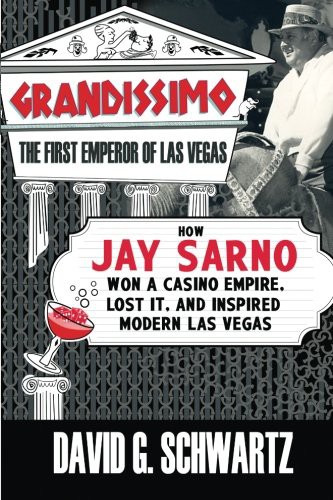
Grandissimo: The First Emperor of Las Vegas
Definitive biography of Jay Sarno detailing his Teamsters loans, Roman design obsessions, high-stakes gambling losses, and 1969 buyout.
View Hardcover on Amazon ↗
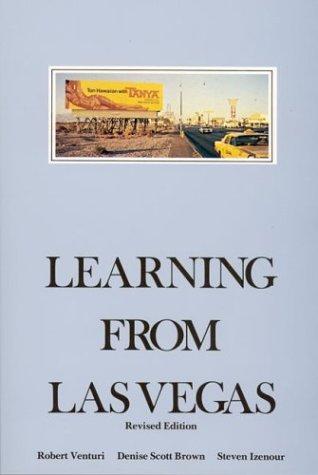
Learning from Las Vegas: The Forgotten Symbolism of Architectural Form
Classic 1972 architectural study analyzing Caesars Palace's 435-foot fountain setback, Carrara statuary, and highway neon signage.
View Hardcover on Amazon ↗
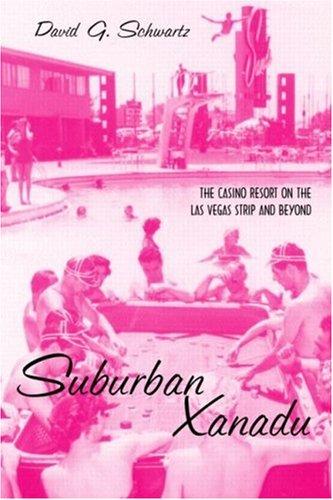
Suburban Xanadu: The Casino Resort on the Las Vegas Strip and Beyond
Explains how Caesars Palace bridged mid-century motor-court resorts and the post-1989 corporate megaresort boom.
View Hardcover on Amazon ↗
1957–1974 • Fremont Street & The Strip
5 Photos

1989–2024 • Megaresort Era
5 Photos

The Mirage Las Vegas History (1989–2024): Volcano to Hard Rock
Read Article →
1973–Present • Strip Megaresorts
5 Photos

Original 1973 MGM Grand Las Vegas: History, 1980 Fire & Bally's
Read Article →
1950–2001 • Classic Strip & Hughes Era
5 Photos

Desert Inn Las Vegas History: Wilbur Clark & Howard Hughes
Read Article →
